Fossil energy remains the backbone of national energy supply. However, behind its significant role, its use also brings serious challenges, ranging from greenhouse gas emissions to inefficiencies caused by energy waste. Moreover, fossil energy is non-renewable, which makes it essential to use it as efficiently as possible.
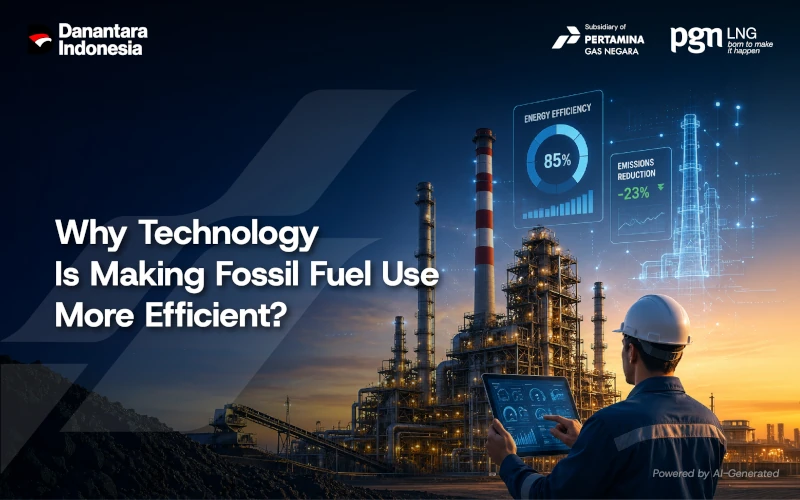
In recent years, technological advancements have played a major role in improving the efficiency of fossil energy use, particularly in the industrial and power generation sectors.
Various innovations such as energy monitoring systems, industrial automation, and more advanced combustion technologies help reduce energy waste and improve industrial operational productivity.
Why Is Energy Efficiency of Fossil Fuels an Important Issue Today?
Energy efficiency has become a critical issue because energy demand continues to rise alongside economic growth, industrialization, and urbanization. At the same time, energy supply capacity cannot be expanded indefinitely.
In this context, efficiency is key to ensuring that existing energy resources are used optimally without constantly increasing supply, which could further raise emissions.
In other words, improving energy efficiency helps balance rising energy demand with the limitations of the supply system, while maintaining national energy stability amid growing consumption pressure.
Beyond energy security, fossil energy efficiency also has a direct impact on reducing greenhouse gas emissions. The more efficient an energy production or consumption process is, the lower the resulting emissions.
This is especially important for energy-intensive sectors such as mining, smelters, manufacturing, power generation, and oil and gas, which inherently require large amounts of energy to maintain continuous operations.
Improving efficiency in these sectors not only reduces operational costs but also serves as a strategic step toward lowering carbon footprints and strengthening companies’ positions in the global energy transition.
Read More: The Negative Impacts of Petroleum Usage
Why Can Technology Make Fossil Energy Use More Efficient?
Technology plays a crucial role in improving fossil energy efficiency by optimizing the energy conversion process from fuel into usable energy.
In principle, not all energy contained in fuel can be converted into electricity or mechanical power. In older technologies, a significant portion of energy is lost as heat.
However, modern advancements such as improved turbine design, more efficient combustion engines, and high-performance power generation systems have significantly increased energy conversion efficiency.
The higher the conversion efficiency, the less fuel is required to produce the same energy output, directly reducing operational costs and increasing productivity. In addition, technology helps reduce energy losses across various stages of the energy system.
These losses typically occur due to waste heat, mechanical friction, incomplete combustion, and inefficient equipment. With the help of sensors, real-time monitoring systems, and data analytics, these energy losses can now be identified and minimized more precisely.
Read More: The Best Energy Alternative to Fossil Fuels
Technologies That Improve Fossil Energy Efficiency
To implement these efficiency principles, today’s industrial sector relies on a combination of digital architecture and thermal innovations that work simultaneously within manufacturing ecosystems.
Automation Systems and Digital Monitoring
The implementation of Supervisory Control and Data Acquisition (SCADA) systems combined with modern monitoring technologies has become a core foundation of industrial energy management.
By integrating sensors across equipment, these systems enable real-time monitoring of operational performance and energy consumption on a centralized platform.
The continuously collected data provides comprehensive visibility into the operational condition of each asset. A key advantage of this system is its ability to detect inefficiencies or anomalies faster than manual inspection methods.
Moreover, the generated data supports data-driven decision-making, enabling faster, more accurate, and more sustainable energy optimization.
Artificial Intelligence and Predictive Maintenance
The use of Artificial Intelligence (AI) in energy asset management has transformed how industries conduct maintenance and system optimization.
Through continuous operational data analysis, AI can identify equipment performance patterns and detect potential degradation before failures occur. With predictive maintenance, systems can forecast possible malfunctions before they lead to downtime.
This not only improves operational reliability but also prevents inefficient machine conditions that can increase energy consumption. The result is improved energy efficiency and reduced overall operational costs.
Waste Heat Recovery Technology
Waste heat is one of the largest sources of energy loss in industrial and power generation systems. Waste Heat Recovery focuses on capturing and reusing thermal energy that would otherwise be released into the environment.
Using technologies such as modern heat exchangers, high-temperature waste heat can be recovered and reused for processes such as boiler feedwater heating or other production needs.
Reusing this energy significantly improves overall energy efficiency. This technology is widely used in energy-intensive industries such as cement plants, steel manufacturing, and various power plants because it drastically reduces energy losses in production processes.
Combined Cycle Power Plant (CCPP) for LNG Efficiency
Combined Cycle Power Plant (CCPP) is one of the most efficient fossil-fuel-based power generation technologies currently available commercially.
This technology is widely used in Liquefied Natural Gas (LNG)-fueled power plants due to LNG’s cleaner and more efficient combustion characteristics compared to other fossil fuels.
CCPP works by combining two power generation cycles, gas turbine and steam turbine, into one integrated system.
The gas turbine generates electricity while also producing high-temperature waste heat, which is then captured instead of being released. This heat is directed into a Heat Recovery Steam Generator (HRSG), where it is used to produce high-pressure steam that drives a steam turbine to generate additional electricity.
Read More: How to Save Electricity with CCPP
What Are the Advantages of LNG as Fuel for Industry and Power Generation?
Liquefied Natural Gas (LNG) is natural gas cooled to extremely low temperatures until it becomes liquid, significantly reducing its volume and making it easier to store and transport.
A key characteristic of LNG is its cleaner combustion compared to coal and oil. With very low sulfur content and lower emissions, LNG is an ideal energy source for modern energy systems.
Due to its efficiency and stability, LNG is widely used in power generation, particularly in gas turbine systems and Combined Cycle Power Plants (CCPP).
In industrial applications, LNG can provide large-scale and consistent energy supply, making it reliable for sectors such as mining, smelters, manufacturing, and power plants that require high energy input.
Another major advantage is its distribution flexibility, as LNG can be transported via ships, tank trucks, and specialized terminals, enabling energy access in areas not connected to pipeline networks.
This combination of combustion efficiency, supply reliability, and distribution flexibility makes LNG a strategic energy choice for industries aiming to optimize energy use while reducing emissions.
For companies looking to understand how LNG can be implemented according to their operational needs, PGN LNG Indonesia is ready to help design the right solution, from supply to distribution.
Learn more about our solutions for supporting your company’s energy transition here: LNG Supply Partner in Indonesia.
References
- Siemens Energy. Accessed in 2026. Combined Cycle Power Plants
- ESDM. Accessed in 2026. MGTC Special G20: Natural Gas for Indonesia
- IEA. Accessed in 2026. Energy Efficiency and Digitalisation
- ScienceDirect. Accessed in 2026. Sensitivity and Sustainability Analysis of Combined Cycle Plant with Integrated LNG Pressure Energy Recovery