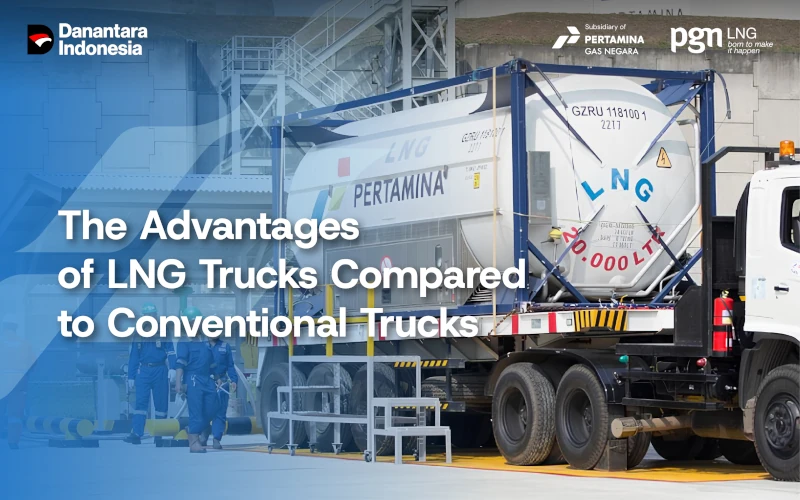
The transportation sector is one of the largest contributors to global emissions, making technological innovation essential to reduce its environmental impact. One solution gaining traction is the use of Liquefied Natural Gas (LNG)-powered trucks.
Compared to conventional diesel trucks, LNG trucks offer not only improved operational efficiency but also significantly lower emissions, making them highly relevant in the transition toward a cleaner transportation system.
What Is an LNG Truck?
An LNG truck is a heavy-duty vehicle that uses liquefied natural gas (LNG) as its primary fuel, serving as an alternative to diesel.
LNG is natural gas that has been cooled to approximately –162°C, transforming it into a liquid state. This process makes LNG far more efficient to store and transport.
These characteristics make LNG particularly suitable for long-haul transportation, as it offers higher energy density. As a result, LNG trucks can achieve longer driving ranges while using lighter storage systems compared to the battery systems required by electric trucks.
Read More: The World’s Top 5 Natural Gas Producing Countries
How Does the LNG Fuel System Work in Trucks?
In LNG trucks, fuel is stored in a liquid state at extremely low temperatures. Before the engine can use it, LNG must be converted back into gaseous form.
This process is managed by a specialized fuel system designed to ensure safety, efficiency, and optimal vehicle performance. The LNG fuel system operates as follows:
- LNG is stored in cryogenic tanks equipped with pressure regulation systems, temperature controls, and safety valves to maintain fuel stability and safety.
- LNG is then routed from the tank to a vaporizer, where the liquid LNG is converted into natural gas before entering the combustion system.
- The engine uses the vaporized natural gas through two primary technologies: Spark-Ignited (SI) and High-Pressure Direct Injection (HPDI).
Spark-Ignited (SI) engines operate entirely on natural gas using spark plugs, similar to gasoline engines.
High-Pressure Direct Injection (HPDI) technology injects high-pressure natural gas directly into the combustion chamber with a small amount of diesel used as an ignition source, delivering performance comparable to conventional diesel engines.
Compared to traditional diesel trucks, the combustion process in LNG trucks is more controlled and produces lower particulate matter and nitrogen oxide emissions. This results in improved engine efficiency and cleaner operation for heavy-duty transportation.
Read More: Peak Shaving Plants, Efficient Innovation to Prevent Blackouts
What Are the Key Advantages of LNG-Powered Trucks?
Compared to gasoline- and diesel-powered trucks, LNG trucks offer several advantages that are difficult for conventional vehicles to match.
Lower Operating Costs
Although the initial investment for LNG trucks is generally higher than for diesel trucks, they offer the potential for significantly lower operating costs over the long term, especially for high-utilization, long-distance operations.
In many markets, LNG fuel prices per unit of energy tend to be more competitive and more stable than diesel, helping operators reduce fuel cost volatility.
In addition, LNG engines are well-suited for consistent, high-efficiency operation on long-haul routes with high load factors. This creates substantial OPEX savings opportunities for logistics providers, long-distance transport operators, and the mining sector.
Lower Emissions and Environmental Benefits
Compared to conventional fuels such as gasoline and diesel, LNG offers clear advantages in terms of emissions.
LNG trucks typically produce 10–20% lower CO₂ emissions than conventional diesel trucks, along with significant reductions in nitrogen oxide (NOx) emissions.
Furthermore, emissions of fine particulate matter (PM2.5) and sulfur oxides (SOx) from LNG trucks are extremely low, approaching zero, because natural gas contains almost no sulfur.
Read More: Virtual Pipelines, Delivering LNG Without Physical Pipelines
Quieter Operation (Low Noise Levels)
LNG-powered trucks operate more quietly than conventional diesel trucks because natural gas combustion is smoother and generates less engine vibration.
In real-world operation, LNG trucks typically record noise levels 3–5 dB lower than diesel engines, making them particularly suitable for urban logistics and night-time operations.
Supporting Clean Energy Policies
LNG trucks are often positioned as part of the transition toward cleaner transportation systems due to their lower emissions compared to diesel.
The adoption of LNG in the transportation sector aligns with many national energy policies aimed at energy diversification, reducing dependence on high-emission fossil fuels, and promoting the use of cleaner fuel alternatives.
Read More: Integrating Smart Grids and LNG to Drive Energy Efficiency
The Future of LNG Trucks in the Transportation Industry
The future of LNG trucks in the transportation sector is becoming increasingly clear, with growing adoption in regions such as Europe and China, and expanding deployment in parts of Asia and North America.
The primary driver is the urgent need to reduce emissions in heavy-duty transportation without compromising driving range or operational reliability.
In Indonesia, the potential for LNG truck development is also significant, given the country’s relatively abundant domestic natural gas resources. As an archipelagic nation, innovations in this sector could provide effective long-distance and inter-island logistics solutions that are both efficient and reliable.
Within the broader energy transition framework, LNG is widely viewed as a bridge fuel toward zero-emission vehicle fleets, as heavy-duty electric and hydrogen trucks continue to face major challenges related to cost, infrastructure availability, and technological readiness.
Under these conditions, LNG trucks represent a realistic and near-term solution that can be implemented today, while allowing time for truly zero-emission vehicle technologies to mature.
References:
- U.S. Department of Energy (DoE). Accessed 2025. How Do Liquefied Natural Gas Trucks Work?
- Reuters. Accessed 2025. LNG-Fuelled Trucking Accelerates in Asia, Denting Diesel Demand
- Volvo Trucks. Accessed 2025. New LNG Trucks Offer the Same Performance as Diesel with 20–100% Lower CO₂ Emissions
- DHL. Accessed 2025. LNG and CNG Trucks: How Sustainable Are Gas-Powered Trucks in Road Freight?
- The ICCT. Accessed 2025. LNG Trucks: A Bridge to Nowhere