Fossil fuels such as coal, crude oil, and natural gas are primary energy sources composed of hydrocarbon compounds. Among these fuels, natural gas stands out due to its simpler and cleaner chemical composition.
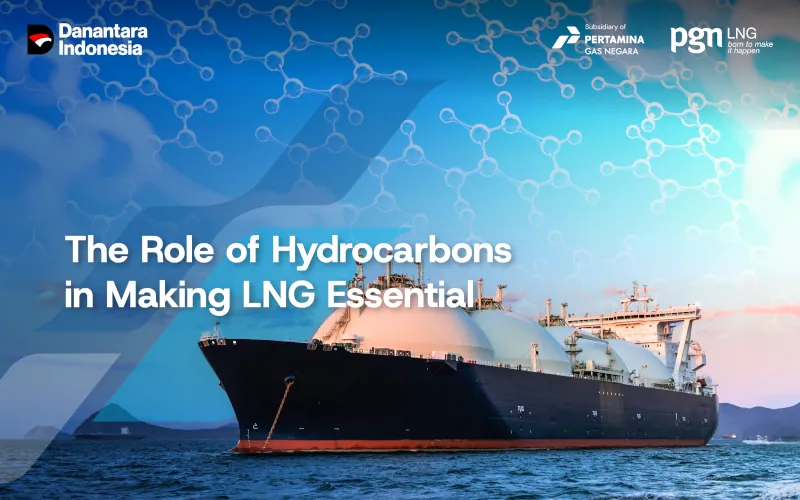
One form of natural gas is LNG (Liquefied Natural Gas), which consists primarily of methane, a hydrocarbon with high energy content. This characteristic allows LNG to produce lower emissions than coal when burned.
In addition, its cleaner and more efficient properties make LNG an important component across various energy-intensive industries, from power generation to manufacturing.
What Are Hydrocarbons?
Hydrocarbons are organic compounds made up of carbon (C) and hydrogen (H) atoms. They are the main components of fossil fuels.
The significant energy released by hydrocarbons comes from carbon–hydrogen chemical bonds, which produce high levels of heat during combustion. This is why hydrocarbons have powered industrial civilization for more than a century.
In the energy context, hydrocarbons differ depending on their molecular structure:
- Solid forms are found in coal, which is rich in carbon.
- Liquid forms are present in crude oil.
- Gaseous forms are known as natural gas, dominated by methane (CH₄).
The fundamental difference that makes natural gas distinctive is its higher hydrogen-to-carbon ratio compared to coal and oil. As a result, its combustion is more efficient and relatively cleaner.
Read More: How Geothermal Energy Converts Earth’s Heat into Electricity
What Are the Uses of Hydrocarbons in Industry?
Hydrocarbons are not only used as energy sources. They also play a critical role in the petrochemical industry.
As a Primary Energy Source and Fuel
The main use of hydrocarbons is as a primary energy source. Most of the world’s electricity production still relies on coal, oil, and natural gas to drive power generation turbines.
In the transportation sector, hydrocarbons in the form of gasoline, diesel, and jet fuel power land vehicles, ships, and aircraft. Natural gas usage continues to grow, both in manufacturing industries and as a cleaner fuel for power generation.
As Feedstock in the Petrochemical Industry
Beyond combustion for energy, hydrocarbons serve as essential feedstock in the petrochemical sector. Without hydrocarbons, products such as plastics and synthetic fertilizers would not exist.
In practice, hydrocarbons like naphtha and ethane undergo steam cracking to produce olefins such as ethylene and propylene, which form the building blocks of plastics and polymers.
Meanwhile, natural gas is processed through steam methane reforming to produce hydrogen, which is then used in the Haber-Bosch process to manufacture ammonia (a key ingredient in fertilizers).
Role in Modern Infrastructure and Manufacturing
Hydrocarbon derivatives, especially those from the petrochemical industry, form the foundation of many materials used in modern manufacturing. In construction, petrochemical-based materials are used for PVC pipes, insulation materials, coatings, and various plastic and composite components.
In the pharmaceutical sector, many chemical raw materials and synthetic compounds are developed from hydrocarbon derivatives and further processed into medicines and healthcare products.
In the textile industry, synthetic fibers such as polyester and nylon are also produced from petrochemical feedstock.
Read More: Common Examples of Air Pollution
What Challenges Do Hydrocarbons Face in the Era of Decarbonization?
In the era of decarbonization, hydrocarbon use faces significant pressure. The energy sector remains the largest global contributor to greenhouse gas emissions.
Coal, which has the highest carbon intensity per unit of energy, is a primary focus of emission reduction policies. The CO₂ emissions generated per kWh of electricity are significantly higher than those from natural gas, prompting many countries to reduce their dependence on coal.
Global policy frameworks, including the Net Zero Emissions by 2050 scenario from the International Energy Agency (IEA), are driving substantial transformation in energy systems, industrial efficiency, and the accelerated adoption of low-carbon technologies.
From an economic perspective, the implementation of instruments such as carbon taxes, carbon pricing mechanisms, and stricter emissions regulations increases the operational costs of power plants and industries that rely on high-carbon-intensity fuels.
Read More: The Benefits of Non-Renewable Energy That Are Hard to Replace
Why Are Hydrocarbons in LNG Cleaner Than Coal and Oil?
LNG is derived from natural gas, which is primarily composed of methane (CH₄). Chemically, methane is the simplest hydrocarbon molecule and has the highest hydrogen-to-carbon ratio among major fossil fuels.
This ratio is crucial because, when burned, methane produces less carbon dioxide (CO₂) per unit of energy than oil or coal, both of which contain higher carbon content.
In electricity generation, natural gas can produce approximately 50–60% less CO₂ than coal. In addition to lower carbon emissions, natural gas combustion generates very low levels of sulfur dioxide (SO₂) and particulate matter due to its minimal sulfur content.
As a result, air quality around gas-based power plants is generally better than around coal-fired facilities.
From an efficiency standpoint, Combined Cycle Gas Turbine (CCGT) power plants can achieve thermal efficiency levels of up to around 60% under optimal conditions. This is higher than conventional coal-fired plants, which typically operate within a range of 33–40%.
Higher efficiency means less fuel is required to produce the same amount of electricity.
References:
- Britannica. Accessed in 2026. Hydrocarbon
- IEA. Accessed in 2026. The Oil and Gas Industry in Energy Transitions
- EIA. Accessed in 2026. Hydrocarbon Gas Liquids Explained