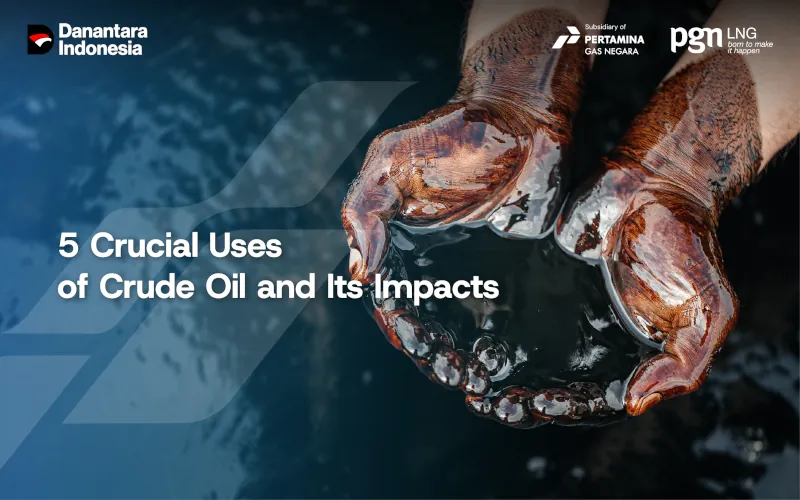
Aside from coal, petroleum remains a key pillar in the national energy mix. Its role is not limited to energy provision but also supports various strategic sectors such as transportation, industry, and petrochemicals.
So, how is petroleum used in modern life, and what negative impacts does its use have? This article provides a comprehensive overview.
What Are the Crucial Uses of Petroleum Today?
From fulfilling basic logistics needs to supporting complex manufacturing supply chains, here are five petroleum uses that remain important today:
1. Transportation Fuel
The transportation sector remains the largest consumer of petroleum. According to IEA data, demand for vehicle fuels continues to rise despite the rising adoption of electric vehicles.
Refined products such as gasoline and diesel drive land mobility, while aviation turbine fuel (avtur) remains the backbone of the aviation industry.
Read More: How Refinery Process Turned Crude Oil into Fuel
2. Oil-Based Power Generation Fuel
In developing countries, petroleum remains a primary source of electricity generation. Diesel generators (gensets) and Diesel Power Plants often provide the most practical solution to supply electricity in areas not connected to the main transmission network.
Apart from off-grid areas, some large industries also rely on oil-fired power plants as backup power or to meet peak loads, ensuring uninterrupted operations.
3. Industrial Petrochemical Feedstock
Petroleum serves as a primary feedstock for the petrochemical industry. Fractions from refining, such as naphtha, are key components in producing olefins, which are further processed into various polymers and plastics.
These petrochemical products are widely used in healthcare devices, electronics components, synthetic textiles, and hygienic food packaging. Hence, the petrochemical sector holds a strategic role in the global industrial supply chain.
4. Heavy Industry Fuel and Boilers
In heavy manufacturing sectors like cement, steel, and metal processing, large-scale heat energy needs are met through fuels, including petroleum.
In certain industrial facilities, petroleum is still used as a thermal energy source for furnaces and boilers. Its ability to generate high, stable temperatures over prolonged periods is crucial to maintaining consistent product quality in high-energy, temperature-sensitive industrial processes.
5. Non-Energy Products (Asphalt, Lubricants, and Derivatives)
Besides energy, petroleum produces valuable non-energy products. Residues and heavy fractions from refining are processed into asphalt (bitumen), which supports the smooth distribution of goods and services.
Petroleum is also the base for lubricants or oils, essential for maintaining machinery performance in industrial and automotive applications. Other derivatives include paraffin wax, cosmetic raw materials, and various chemical solvents widely used in households and industries.
Read More: The Differences Between Petroleum and Gas and Their Roles
What Are the Drawbacks of Petroleum from a Modern Energy Perspective?
Despite its significant contribution to industry and economic growth, petroleum use carries increasingly serious environmental consequences. In the modern energy paradigm, petroleum is not only a strategic resource but also a challenge that must be managed due to its environmental impacts.
Globally, the coal and petroleum energy sectors are major contributors to carbon dioxide (CO₂) emissions. Combustion of petroleum fuels contributes to the greenhouse effect, driving global warming and climate change.
Burning oil-based fuels generates pollutants such as sulfur dioxide (SO₂), nitrogen oxides (NOx), and fine particulate matter, which can degrade air quality and increase the risk of respiratory and cardiovascular diseases.
Beyond environmental issues, petroleum prices are highly influenced by geopolitical dynamics and producer country policies. Price fluctuations create cost uncertainty for industries and can potentially trigger inflationary pressures.
Read More: Components in Natural Gas That Make It Highly Valuable!
LNG as a Cleaner Energy Alternative to Petroleum
Acknowledging the environmental impact of petroleum, the energy industry is increasingly adopting lower-emission alternatives, one of which is Liquefied Natural Gas (LNG).
Compared to oil fuels, LNG offers a cleaner emissions profile. Combustion of natural gas produces approximately 15–25% less CO₂ per unit of energy than diesel or fuel oil and nearly zero sulfur dioxide (SO₂) and particulate emissions.
These advantages make LNG a viable transitional option for reducing emissions in industry and power generation.
Because LNG is in liquid form, it can be transported to remote areas not connected to gas pipelines via sea or land using cryogenic tanks. This flexibility expands access to cleaner energy without the need for rapid pipeline infrastructure development.
References:
- IEA. Accessed in 2026. World Energy Outlook 2025
- EIA. Accessed in 2026. Oil and Petroleum Products Explained
- MedWin Publishers. Accessed in 2026. Petroleum Industries and Its Impact of Petroleum Extraction on the Environment