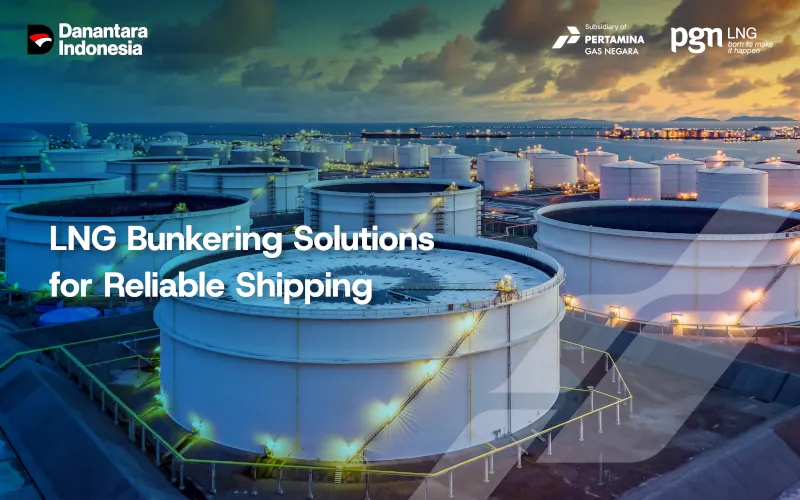
LNG-fueled vessels face challenges in refueling operations. Not all ports are equipped with LNG bunkering infrastructure, meaning refueling can only be carried out at certain locations.
In maritime operations, time efficiency is critical. Slow refueling processes can affect sailing schedules and increase operational costs.
Therefore, ship operators need a partner capable of providing LNG bunkering services with extensive distribution coverage and reliable systems. In this regard, PGN LNG Indonesia offers flexible LNG refueling solutions designed to support smooth and efficient maritime operations.
What Are the Real Challenges of LNG Bunkering for Ship Operators?
Operating an LNG-fueled fleet comes with challenges, particularly in accessing refueling infrastructure.
Below are some of the main challenges commonly faced by ship operators in implementing LNG bunkering:
Limited LNG Infrastructure at Certain Ports
Compared to the well-established marine fuel oil distribution network, LNG bunkering infrastructure remains under development and is not yet widely available across ports.
Several strategic ports along major international and domestic shipping routes still lack dedicated LNG bunkering facilities. Limited refueling points can affect route flexibility and sailing schedules.
Logistical Complexity and Supply Coordination
According to oil and gas industry technical standards, LNG must be stored at approximately -162°C to remain in liquid form under low pressure.
The handling of cryogenic fluids requires specialized tanks with high-performance insulation, along with layered safety systems to control potential risks. This includes managing boil-off gas (BOG), which naturally forms due to heat ingress from the surrounding environment during storage.
In bunkering operations, precise coordination between vessel berthing schedules and the arrival of LNG supply units is essential. This synchronization ensures that the refueling process does not disrupt sailing timelines.
Risk of Operational Disruptions Due to Supply Uncertainty
In the shipping industry, fuel supply delays can directly affect vessel productivity. Every idle hour can generate additional costs, including port fees, crew operational expenses, and potential penalties due to delayed cargo delivery.
Supply uncertainty is a key operational risk that must be managed carefully. Ship operators depend heavily on supply partners with stable volume capacity, schedule certainty, and well-integrated logistics networks.
Why Is Choosing the Right LNG Bunkering Partner Crucial?
Selecting an LNG bunkering service provider should not be viewed merely as a fuel transaction. Rather, it is a strategic partnership involving infrastructure integration, risk management, and compliance with international safety and regulatory standards.
In LNG operations, supply reliability and technical readiness are decisive factors. The ideal partner must possess a strong logistics network, stable volume capacity, and standardized safety procedures to ensure safe and efficient bunkering operations.
More importantly, the right partner can proactively help ship operators manage operational risks, from schedule planning to mitigating potential supply disruptions.
Getting to Know PGN LNG Indonesia and Its Role in National LNG Infrastructure
As part of Indonesia’s national energy ecosystem, PT PGN LNG Indonesia focuses on developing LNG business activities and infrastructure across the country.
Its role spans multiple segments of the LNG value chain, including storage, distribution, and the management of floating facilities such as Floating Storage Regasification Units (FSRUs).
The company’s contribution to strengthening the national gas supply chain is reflected in its involvement in managing and developing strategic infrastructure projects. This technical capability and operational experience form the foundation for ensuring reliable LNG distribution to industries, power plants, and the maritime sector.
We are committed to delivering supply stability and integrated solutions for our business partners. Our experienced technical team and standardized operational systems play a vital role in maintaining sustainable LNG availability across various regions in Indonesia.
What Integrated LNG Bunkering Solutions Does PGN LNG Indonesia Offer?
PGN LNG understands that each vessel and port has different operational characteristics. Therefore, we provide several LNG bunkering schemes tailored to user needs, including:
- Ship-to-Ship
- Truck-to-Ship
- Direct Berthing
The Ship-to-Ship (STS) scheme enables LNG transfer from a supply vessel directly to the receiving vessel, either at port or at a designated anchorage point.
The Truck-to-Ship method offers greater flexibility for vessels with smaller volume requirements or those operating at ports without permanent bunkering facilities. Meanwhile, Direct Berthing is conducted through dedicated LNG terminals or jetty facilities.
What Are the Advantages of PGN LNG as a Long-Term LNG Bunkering Partner?
PGN LNG Indonesia is part of Indonesia’s state-owned enterprise (SOE) energy ecosystem, assuring in terms of credibility, reliability, and business sustainability.
For maritime industry players, this forms an important foundation when selecting a stable and trustworthy long-term LNG bunkering partner.
Supported by nationwide operational experience, we possess strong energy distribution capabilities across Indonesia’s archipelagic regions.
PGN LNG Indonesia’s main strengths lie in supply reliability and infrastructure readiness. With continuously expanding networks and facilities, we ensure consistent energy availability while offering flexible distribution methods tailored to the operational needs of maritime customers.
To obtain reliable, flexible, and sustainable LNG bunkering solutions for your maritime operations, contact PGN LNG Indonesia.