Amid growing demand for energy efficiency and efforts to reduce carbon emissions, many industries are starting to look at solar power plants as an alternative to cut electricity costs.
However, for sectors such as mining and smelting that generally operate 24 hours a day and require large amounts of energy, the reliability of energy supply is a crucial factor.
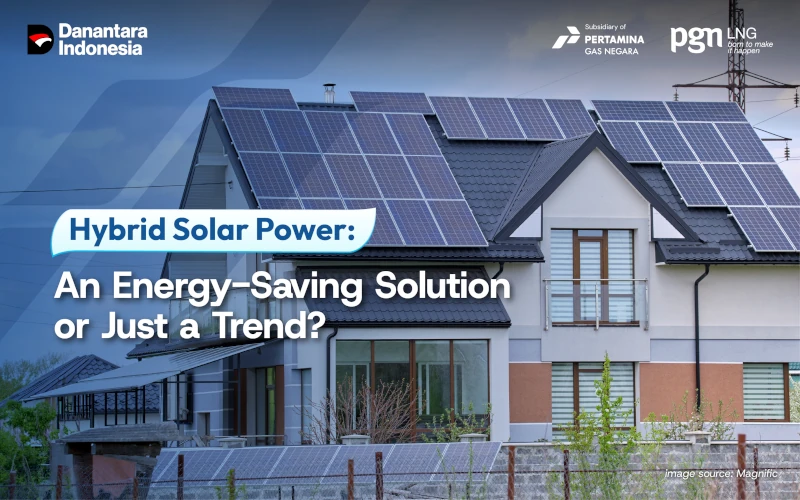
In these conditions, hybrid solar power plants emerge as a solution that combines solar energy with other electricity sources, such as generators or the power grid, so that the power supply remains more stable compared to relying on solar power plants alone.
So, can hybrid solar power plants truly save electricity costs for industry, or are they only effective under certain conditions?
What Is a Hybrid Solar Power Plant and How Does It Work?
A hybrid solar power plant is a power generation system that combines solar panels (photovoltaic/PV) with one or more other energy sources, such as the PLN grid, diesel generators, gas/LNG engines, or a Battery Energy Storage System (BESS).
This system is designed to improve the reliability of electricity supply because it does not rely solely on solar energy.
To ensure all components work optimally, a hybrid solar power plant is also equipped with an inverter to convert direct current from the solar panels into alternating current, as well as an Energy Management System (EMS) that regulates the distribution of energy from each source.
In operation, a hybrid solar power plant prioritizes the use of solar energy as long as its production is sufficient to meet the load demand. If there is a surplus of energy, electricity will be stored in the BESS for use when solar energy production decreases, for example, at night, during cloudy weather, or when a load surge occurs.
If the power from the battery is no longer sufficient, the EMS will automatically switch the supply to a backup energy source, such as the PLN grid or a generator, so that the electricity supply remains stable while also helping to optimize operational costs.
Read More: The Benefits of Non-Renewable Energy That Are Hard to Replace
Can a Hybrid Solar Power Plant Save Electricity Costs?
Yes, a hybrid solar power plant can save electricity costs, but the amount of savings depends on the operational conditions of each industry.
Savings occur because during the day, electricity loads are prioritized using energy from the solar panels, so electricity consumption from PLN or generator fuel use can be reduced.
If solar electricity production is surplus, that energy is stored in the Battery Energy Storage System (BESS) for use when solar production decreases or when electricity tariffs are high (peak hours). This way, electricity purchase costs and fuel consumption can be reduced.
A techno-economic study in Saudi Arabia reported that a hybrid system combining PV, batteries, and generators was able to save energy costs by around 41% compared to a diesel fuel-only power generation system.
However, that figure is the result of a case study, so it cannot be used as a reference for all projects. The amount of savings is still influenced by load profiles, system capacity, solar irradiation intensity, and electricity tariffs at the location.
Read More: Can Water Become Energy? Here’s the Explanation
Is a Hybrid Solar Power Plant Suitable for Industries with High Loads?
Industries such as smelters, mining operations, and manufacturing have very large electricity needs, generally reaching tens to hundreds of megawatts, and operate continuously 24 hours a day.
Their production processes are also highly sensitive to electricity supply disruptions, so power fluctuations and downtime can disrupt operations and cause significant losses.
Given these characteristics, industries require a stable and continuous electricity supply. Because electricity production from solar panels depends on the intensity of sunlight, solar power plants cannot be the sole energy source to support all operational loads.
Therefore, hybrid solar power plants are better suited as a supplementary power source rather than as the main replacement for electricity supply. For industries that operate 24 hours a day, such as smelters, mining operations, and manufacturing, this system is used to reduce electricity consumption from PLN or generator fuel when solar energy is available.
With this approach, industries can reduce energy costs and carbon emissions without sacrificing the supply reliability needed to maintain production continuity.
Read More: What’s the Difference Between LPG and LNG?
Why LNG Is Starting to Be Positioned as a Complement to Hybrid Solar Power Plants for Industry?
Hybrid solar power plants can reduce electricity consumption from the grid or from coal or diesel-powered plants, but their electricity production still depends on the availability of sunlight. For this reason, LNG (Liquefied Natural Gas) is starting to be positioned as a complementary energy source that can provide electricity stably and in accordance with demand.
The concept of combining solar power plants and gas-fired power plants is also becoming one of the options to replace captive coal power plants in industrial areas that are far from energy access. In this scheme, the solar power plant supplies electricity during the day, while the gas power plant takes over the supply when electricity production from the solar panels decreases or stops.
In addition to maintaining electricity supply reliability, the use of LNG also produces lower emissions compared to coal and diesel, which can support industrial decarbonization efforts.
However, the effectiveness of this scheme depends heavily on the reliability of the LNG supply itself. Industrial areas that are far from energy access particularly need a partner who can guarantee LNG distribution to the location.
This factor is what makes the selection of an LNG partner a strategic decision. PGN LNG Indonesia is present with integrated services designed to address these challenges, including for industrial areas with limited energy access.
Find out how PGN LNG Indonesia meets your industry’s energy needs here: LNG Provider for Industrial Energy.
References:
- Elum Energy. Accessed 2026. What is a Solar Diesel Hybrid System?
- Springer. Accessed 2026. Techno-economic assessment for energy transition from diesel-based to hybrid energy system-based off-grids in Saudi Arabia
- Gletscher Energy. Accessed 2026. Replacing Diesel Generators: A Strategic Blueprint for Remote Infrastructure Electrification
- ScienceDirect. Accessed 2026. Case study on decarbonization strategies for LNG export terminals using heat and power from CSP/PV hybrid plants