Coal remains an important energy source for the industrial sector in Indonesia, spanning power generation, smelting, manufacturing, cement, and steel. This dependence makes coal availability a critical factor for smooth operations, especially for industries that require energy on a massive scale.
For this reason, when coal supply is disrupted or its price rises, companies can face higher energy costs, operational disruptions, and the risk of production stoppages. To properly anticipate these risks, companies need to understand the causes of coal scarcity and the steps to reduce its impact.
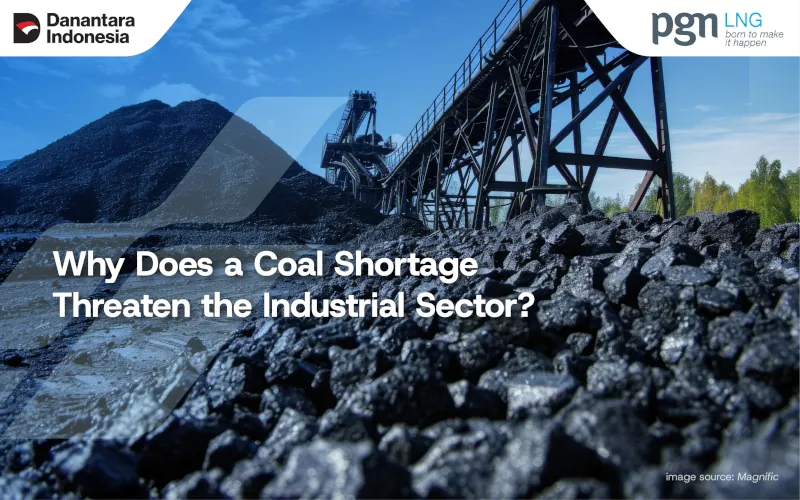
Why Does Coal Scarcity Threaten the Industrial Sector?
Coal scarcity poses a threat because companies that already depend on this fuel will immediately feel its negative effects when supply is disrupted. Switching to another energy source also cannot be done instantly because it requires planning and preparation of the supporting technology.
Here are some of the factors that make coal scarcity capable of having a damaging effect on industry.
Industry Dependence on Coal Is Still Very High
In industries such as power generation, smelting, cement, steel, pulp and paper, and boiler-based manufacturing, coal is an important part of the production process, so its availability has a direct effect on operational continuity.
The greater the dependence on coal, the more significant the impact of a supply disruption, especially for industries that require large amounts of energy.
Coal Is Difficult to Replace in a Short Time
Many industrial facilities are designed to use coal as their fuel, so switching to alternative fuels will require technical modifications, investment, and operational adjustments.
Companies also need to conduct technical studies and ensure infrastructure readiness before carrying out an energy conversion. This is what makes coal difficult to replace in a short period of time.
Supply Disruptions Can Hinder Operational Continuity
Supply disruptions or rising coal prices can increase energy costs and squeeze company production costs. If supply is insufficient, companies also risk reducing operating capacity or temporarily halting the production process, which then affects supply chain stability.
For this reason, for industries that still depend on coal, scarcity is not only a matter of fuel availability, but also a risk to operational and business continuity.
Read More: The Benefits of Coal and Its Risks
What Causes Coal Scarcity?
Coal scarcity is generally influenced by a combination of increased demand, production disruptions, and distribution obstacles.
When demand for coal from both domestic and global sectors rises, supply reliability becomes increasingly important. Supply continuity itself can be affected by various factors, including extreme weather, mine operational disruptions, and technical production constraints.
On the other hand, transportation and distribution disruptions can also hinder coal delivery even when production continues to run.
Government policy and global market dynamics can also affect coal availability. Policies such as the Domestic Market Obligation (DMO) regulate the obligation to meet domestic market needs, while changes in global trade conditions and geopolitics can affect trade flows and coal prices.
Read More: Latest Data on Indonesia’s Coal Reserves
How Can Companies Reduce the Risk of Coal Scarcity?
Although companies cannot control coal market conditions, the risk of supply disruptions can be reduced through more reliable procurement strategies.
Supplier diversification, long-term supply contracts, and adequate stock management can help companies maintain fuel availability when price changes or supply disruptions occur.
Companies also need to monitor market conditions regularly, including price developments, demand, and potential supply disruptions, so that procurement decisions can be made more quickly.
In addition to securing supply, companies can improve energy use efficiency by optimizing fuel consumption, improving boiler efficiency, and implementing energy management systems.
Over the long term, companies can also consider diversifying energy sources to reduce dependence on coal, for example by using LNG.
This strategy can strengthen energy resilience while giving companies greater flexibility in facing future market changes and energy needs.
Read More: The Toxic Air Pollutants Released by Coal
Why Is LNG One of the Alternatives for Supporting Industrial Energy Resilience?
LNG (Liquefied Natural Gas) is one of the alternatives that companies can consider to reduce dependence on coal and diversify their energy sources. By having another energy source option, companies can reduce the risks that arise when coal supply is disrupted.
Compared to coal, LNG combustion also produces lower CO2, SOx, NOx, and particulate emissions, which can support company efforts to reduce emissions from energy use.
From a supply standpoint, LNG needs can be planned through structured distribution schemes and supply contracts, allowing companies to manage their energy needs in a more planned manner.
For an energy diversification strategy to run effectively, companies need to ensure that the chosen LNG source is capable of supporting operational needs over the long term. Supply availability, distribution schemes, and the suitability of solutions to energy needs are aspects that need to be considered from the planning stage.
PGN LNG Indonesia supports these needs by providing LNG for various industrial energy needs. By taking into account the company’s energy needs and consumption patterns, we provide LNG solutions as part of company efforts to expand energy source options while maintaining supply availability to support long term operations.
Find out what solutions we provide to support your industry here: LNG Provider in Indonesia.
References
- IEA. Accessed 2026. Coal Mid-Year Update 2025 – Overview
- Kontan. Accessed 2026. Outlook Industri Batubara 2026: Ada Harapan, Meski Harga Tergantung Suplai-Permintaan
- Kompas. Accessed 2026. Industri Batu Bara Diprediksi Masih Tertekan hingga 2026
- Dunia Energi. Accessed 2026. Produksi Batu Bara 2026 Dipangkas Jadi Sekitar 600 Jutaan Ton