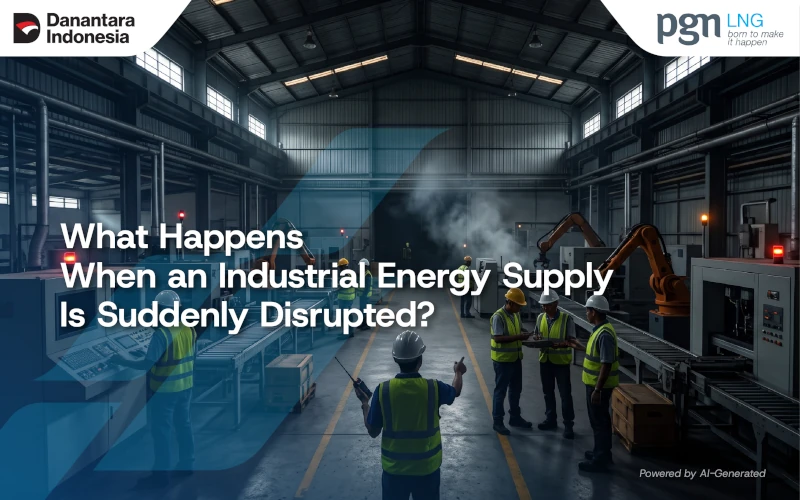
The smooth running of industrial operations depends heavily on the availability of a reliable energy supply. However, meeting energy needs carries a significant risk of supply chain disruption, especially when industries depend on supply from abroad.
This dependence makes energy availability vulnerable to global geopolitical dynamics that can hinder distribution and even cause sudden supply stoppages.
When energy supply stops, companies cannot run production processes normally. This condition has the potential to hinder operational activities, and if it lasts for a long time, losses can grow larger and threaten the continuity of the company’s business.
What Is the Impact of Energy Supply Disruption on Industry?
Energy supply disruption can affect two main aspects of industrial activity, namely operations and finances.
When energy is not available as needed, companies risk experiencing production disruptions, and the implications can reduce company revenue. On the other hand, the cost of maintaining and restoring operational activities can be more expensive.
Here are the potential impacts that industries will experience if there is no energy supply, including:
Production Process Stoppage and Reduced Operational Capacity
Machines, production equipment, and processing facilities need an energy supply to be able to carry out operational processes. When electricity or fuel supply stops, companies may have to halt some or all production lines because equipment cannot operate smoothly.
For example, in the mining sector, energy disruption can stop the operation of heavy equipment, pumps, and mineral processing facilities.
The stoppage of one production stage can hinder the following stages. For this reason, energy disruption not only affects a single piece of equipment, but can also reduce overall production capacity.
Loss of Revenue Due to Decreased Production
When energy supply is disrupted, companies may have to stop production or reduce operational capacity, so the number of products generated also declines.
This condition causes companies to lose potential revenue because they cannot meet market demand according to targets.
The problem does not stop there. Labor costs, facility maintenance, and other operational obligations still have to be borne by the company even when production activity is reduced or temporarily stopped, so business revenue shrinks further.
Increased Operational Costs and Delivery Delays
To reduce the impact of energy supply disruption, companies may need to use replacement energy sources, such as generators or backup fuel.
The use of these energy sources can increase operational costs because companies must provide additional fuel, operate generating equipment, and arrange energy distribution to production facilities.
After the main supply returns to normal, companies also need to ensure that equipment remains in safe condition through inspection and restarting before production resumes.
On the other hand, a halt or reduction in production can cause companies to be unable to meet delivery targets on schedule.
If these delays breach contract terms, companies may face penalties or compensation obligations to customers. Repeated delays can also reduce customer trust and affect business relationships over the long term.
Read More: Causes of Petroleum Fuel Shortages and Their Impact on Industry
What Factors Determine the Magnitude of the Impact of Energy Supply Disruption?
The magnitude of the impact of energy supply disruption on industry is influenced by the level of the company’s dependence on the energy source used and the duration of the disruption.
Companies that rely on only one energy source or distribution route face greater risk because they do not have many options when the main supply stops. This risk is even higher if their production processes require energy on a continuous basis.
In addition, the longer the disruption lasts, the greater the potential for reduced production capacity, increased operational costs, and delays in fulfilling demand for goods.
How Can Companies Anticipate Energy Supply Disruption?
Companies need to prepare backup energy sources so that operational activities can continue when the main supply is disrupted. This backup can take the form of generators, fuel inventory, or internal power generation facilities that can be activated when needed.
However, backup energy capacity needs to be adjusted to critical operational needs and the estimated duration of disruption that the company can still tolerate.
In this way, backup energy can be prioritized for operating important equipment and facilities so that the impact of the main supply stoppage does not immediately spread to all production activities.
In addition to providing backup energy, companies can also diversify their energy sources to reduce dependence on a single type of energy, supplier, or distribution route.
One way is to combine energy sources that suit production process needs, for example by utilizing natural gas as part of the energy mix alongside electricity or other fuels.
With a more diverse range of energy sources and supply routes, companies have alternatives when one source experiences disruption. This strategy can help maintain energy availability while reducing the risk of dependence on a single supply route.
Read More: Top 5 Oil-Producing Countries: Where Does Indonesia Rank?
How Can LNG Support the Reliability of Industrial Energy Supply?
One energy source that can be considered in this diversification strategy is Liquefied Natural Gas (LNG). LNG allows natural gas to be stored in liquid form and distributed to various regions, including industrial locations not yet reached by the gas pipeline network.
With these characteristics, LNG can provide a gas supply to meet industrial energy needs. However, energy diversification is not only about choosing alternative energy sources, but also about how companies can access and ensure their availability on a sustainable basis.
This requires the support of a supply chain capable of reaching operational locations and adjusting supply volumes to industrial needs. In this way, companies can integrate LNG into their energy diversification strategy without neglecting the need for operational continuity.
PGN LNG Indonesia provides integrated LNG solutions covering supply, storage, transportation, and regasification to support the energy needs of various industrial sectors.
Through these services, we help companies gain access to LNG supply while also supporting the development of a more flexible energy strategy suited to their business characteristics.
Want to explore opportunities to use LNG as part of your company’s energy diversification strategy? Learn about our various solutions here: LNG Provider in Indonesia.
References
- IEA. Accessed 2026. ASEAN Energy Security Review
- IEA. Accessed 2026. Energy System Resilience – Executive summary
- IMF. Accessed 2026. Losing to Blackouts: Evidence from Firm Level Data
- World Bank. Accessed 2026. The Business Costs of Unreliable Infrastructure in Developing Countries