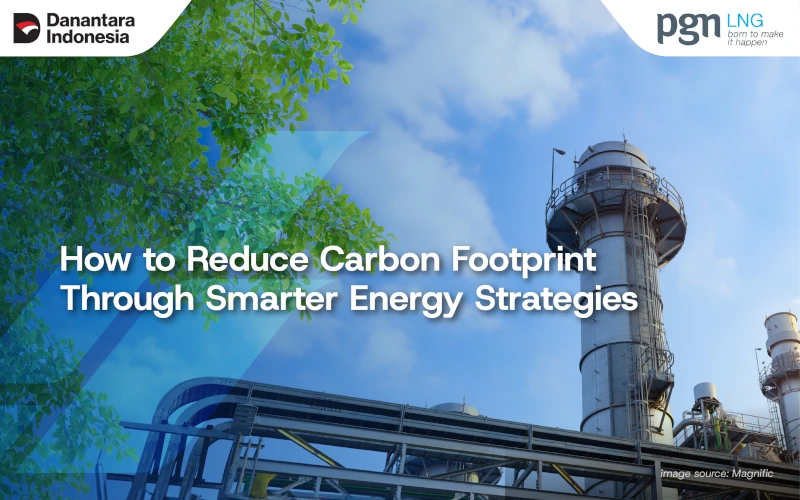
A carbon footprint is the total greenhouse gas (GHG) emissions generated from a company’s activities, including energy use, production processes, and transportation. In industry, fossil fuel combustion is used to generate electricity, heat, and operate equipment, making it one of the emission sources that needs attention.
To reduce their carbon footprint, companies can take various steps, one of which is through an energy use strategy. This approach is important because proper energy management can help reduce emissions from operational activities while still meeting the energy needs that support production continuity.
Why Does Industry Need to Reduce Its Carbon Footprint?
Industrial activities produce greenhouse gas emissions from various sources, including fuel combustion to generate heat and to operate machinery.
These emissions become part of a company’s carbon footprint that needs to be managed. By identifying emission sources from energy use, companies can understand which activities contribute most to emissions and determine reduction steps.
Reducing the carbon footprint also provides a number of benefits for industry. For example, more efficient energy use can reduce fuel and electricity consumption, so operational costs are more controlled.
From a business standpoint, emission reduction efforts can also improve competitiveness because customers, investors, and supply chain partners are increasingly considering sustainability aspects in making business decisions.
Read More: Is Carbon Capture and Storage Just a Green Gimmick?
What Are the Energy Strategies for Reducing a Company’s Carbon Footprint?
Companies can reduce emissions through two main approaches, namely improving energy use efficiency and changing the composition of the energy sources used.
These two approaches can be implemented through several strategies tailored to the needs and operational characteristics of the industry.
Improving Energy Use Efficiency
Energy efficiency is achieved by reducing energy consumption without lowering operational capacity and productivity.
Companies can implement it by optimizing the operation of machinery and boilers, carrying out regular equipment maintenance, and utilizing waste heat recovery systems to reuse heat that would otherwise be lost.
Implementing an energy management system also helps companies monitor and evaluate energy consumption on a regular basis, so that fuel and electricity use can be controlled.
With reduced energy consumption, emissions from fuel combustion and electricity use also have the potential to decline.
Utilizing Renewable Energy
Companies can utilize renewable energy such as solar power by installing rooftop solar power plants at industrial facilities or as a power source for industries in remote locations.
The use of this energy source can reduce dependence on electricity generated from fossil fuel combustion. However, electricity production from the sun depends on natural conditions, so its output fluctuates.
For this reason, companies need to consider energy storage systems such as a Battery Energy Storage System (BESS) to maintain electricity supply reliability when renewable energy production declines.
Electrifying Operations
Electrification is carried out by replacing equipment that directly uses coal or oil with electricity-based technology, such as electric boilers, heat pumps, and electric operational equipment.
This replacement can reduce direct emissions from fuel combustion at the industrial site because the energy needs of this equipment are met using electricity.
However, if the electricity is still generated from coal combustion, which has high emission intensity, the emission reduction benefit becomes more limited. For this reason, electrification will provide greater benefits when supported by low carbon intensity electricity supply, for example from gas-fired power plants.
Switching to Fuels with Lower Emission Intensity
In production processes that still require fuel combustion, companies can consider using fuels with lower emission intensity, for example replacing coal or diesel with natural gas as the main energy source. Natural gas produces lower carbon dioxide emissions compared to coal and diesel.
One form of natural gas that can be used to meet industrial energy needs is Liquefied Natural Gas (LNG), which is easier to store and distribute, so it can reach industrial facilities not yet connected to the gas pipeline network.
Read More: Is Carbon Trading Truly an Emissions Solution or Just an Illusion?
How Can the Right Energy Strategy for Industry Be Determined?
Every industry has different energy needs, operational characteristics, and geographic conditions.
For this reason, the energy strategy needs to be tailored to the conditions of each facility so that emission reductions do not disrupt production activities. Before making a choice, companies need to evaluate the following factors:
- Energy needs: Volume, type of energy, and consumption patterns based on operating hours and production capacity.
- Location and energy availability: Access to the electricity grid, renewable energy sources, gas networks, or LNG distribution facilities.
- Infrastructure readiness: Availability of power plants, energy storage systems, production equipment, and distribution facilities.
- Investment and operational costs: Energy procurement costs, technology investment, maintenance, and long-term savings potential.
- Supply reliability: The ability of the energy source to meet production needs consistently, especially for industries that operate 24 hours a day.
In addition to considering these factors, companies also need to diversify their energy sources so as not to depend on a single type of supply.
A combination of electricity, renewable energy, and other fuels can help adjust supply to production needs while anticipating disruptions to particular energy sources. In this way, companies can manage costs and emissions without neglecting operational reliability.
How Can the Success of a Carbon Footprint Reduction Strategy Be Measured?
The success of a carbon footprint reduction strategy can be measured by comparing emissions before and after implementing the energy strategy.
Companies can use several indicators, such as:
- Total greenhouse gas emissions in a given period.
- Carbon emission intensity per unit of production (for example, tons of CO2e per ton of product).
- Energy consumption to produce each unit of product.
- Changes in the proportion of renewable energy, electricity, and fossil fuel use.
Carbon footprint reduction can be considered achieved when total emissions or emission intensity declines compared to the initial condition, accompanied by increasingly efficient energy use or a larger share of low-emission energy.
For the evaluation results to be accurate, companies need to establish an emissions baseline or initial condition, use consistent calculation methods, and carry out regular monitoring to ensure emission reduction targets are met.
Read More: Carbon Footprint Rising, LNG Comes as the Savior
How Can LNG Help Industry Reduce Its Carbon Footprint?
Using LNG as an alternative fuel to replace coal or diesel can help industry reduce its carbon footprint. This is because natural gas combustion produces lower CO2 emissions compared to both of these fuels.
By switching to LNG, companies have the potential to reduce emissions from electricity generation and heat provision. To maximize these benefits, companies need to ensure LNG supply availability that matches their energy needs and operational capacity.
Adequate infrastructure support and a distribution system are also needed so that LNG utilization can be applied consistently in production activities. For this reason, companies need a partner capable of supporting LNG supply while ensuring it can reach the industrial location.
PGN LNG Indonesia provides integrated LNG supply solutions to support the energy needs of various industrial sectors. Through LNG supply, storage, transportation, and regasification services, we help companies access natural gas as one of the transition energy options to support emission reduction efforts.
Want to know which LNG solution suits your company’s energy needs? Learn more about our services here: LNG Provider in Indonesia.
References
- GHG Protocol. Accessed 2026. A Corporate Accounting and Reporting Standard
- IEA. Accessed 2026. Energy Management for Industry
- BPK. Accessed 2026. Ministerial Regulation of the Ministry of Energy and Mineral Resources on Energy Management
- EIA. Accessed 2026. Carbon Dioxide Emissions Coefficients
- Deloitte. Accessed 2026. Calculating GHG Emissions and Choosing a Base Year