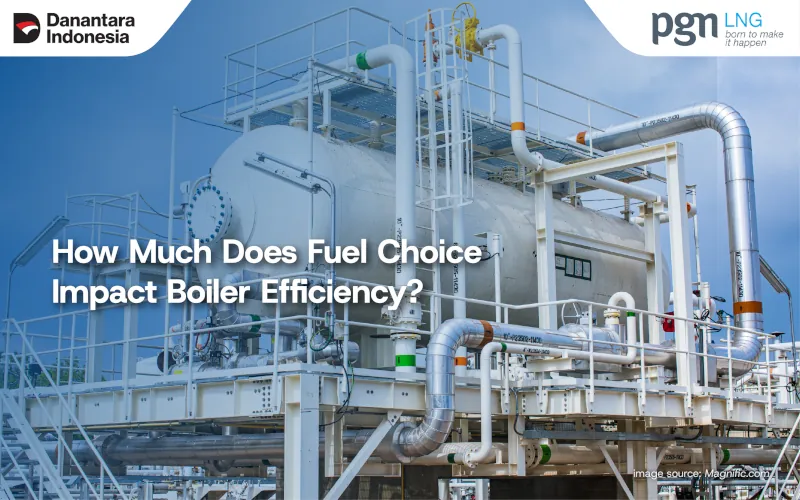
A boiler is one of the highest energy-consuming pieces of equipment across various industrial sectors, so its efficiency level significantly affects operational costs.
Most of a boiler’s energy comes from the fuel combustion process. For this reason, fuel selection is one of the main factors that determine system efficiency. Currently, the most commonly used fuels include natural gas, diesel, coal, and biomass.
Fuel with the right characteristics can produce more optimal combustion, improve energy utilization, and reduce fuel consumption at the same time. So, among these various types of fuel, which one offers better boiler efficiency?
Why Does Fuel Significantly Affect Boiler Efficiency?
Boiler efficiency is the ratio of the energy from fuel that is successfully converted into steam to the total energy contained in that fuel.
The greater the energy that can be utilized to generate steam, the higher the boiler efficiency. One of the most determining factors is the quality of the combustion process, which is heavily influenced by the characteristics of the fuel being used.
It is these differences in characteristics that cause each type of fuel to produce different efficiency levels.
Some fuel characteristics that affect boiler efficiency include:
- Calorific value: determines the amount of heat energy available.
- Moisture content: high moisture content reduces the heat that can be utilized because some energy is used to evaporate the water.
- Ash content: reduces the fraction of fuel that burns and can inhibit heat transfer.
- Sulfur content and chemical composition: affects combustion air requirements and the potential for corrosion in the system.
- Ease of achieving complete combustion: produces more optimal energy utilization and reduces unburned fuel residue.
All of these characteristics determine how much heat can actually be converted into steam, while also affecting the magnitude of heat loss, both through flue gas and combustion residue.
Read More: Types of Fuel That the Most Environmentally Friendly
How Much Does Fuel Affect Boiler Efficiency?
Fuel is one of the largest factors affecting boiler efficiency. Changing the type of fuel can result in efficiency differences of several percent. Although it may seem small, an efficiency difference of just 1% to 3% can have a significant impact on annual energy consumption and operational costs.
In addition, combustion performance is also affected by the compatibility between the burner and the type of fuel used, so that the system can operate optimally.
Below is a comparison table of boiler efficiency ranges based on the type of fuel used:
| Fuel Type | Key Characteristics | Boiler Efficiency Range* |
| LNG / Natural Gas | Clean combustion, almost no ash | ± 94% – 95% |
| Fuel Oil / Diesel | Relatively stable combustion. | ± 92% – 95% |
| Coal | High ash content, more complex combustion | ± 88% – 92% |
| Biomass | Heavily influenced by moisture content | ± 85% – 91% |
The figures above are general ranges based on industry references. Actual efficiency may differ depending on boiler design, burner type and settings, excess air ratio, operating conditions, fuel quality, and the effectiveness of the maintenance program.
Read More: 5 Benefits of Electricity That Transform Human Life
What Is the Impact of Using Less Efficient Fuel in a Boiler?
The use of less efficient fuel causes more energy to be wasted during the combustion process. As a result, the boiler requires greater fuel consumption to produce the same amount of steam, causing operational costs to increase as well.
In addition, fuel with high ash and impurity content can trigger fouling and slagging on heat transfer surfaces. This condition reduces heat transfer efficiency while also requiring the boiler to undergo more frequent cleaning and maintenance.
These impacts not only increase the risk of downtime and shorten equipment service life, but also reduce overall operational reliability.
On the other hand, suboptimal combustion can increase flue gas emissions such as CO2, SOx, and NOx, making it more difficult for companies to comply with environmental regulations and Environmental, Social, and Governance (ESG) targets.
Ultimately, the combination of increased fuel consumption, maintenance costs, and operational disruptions can reduce company productivity and profitability.
Read More: Can Natural Gas Really Run Out?
Why Is LNG a More Efficient Boiler Fuel?
LNG (Liquefied Natural Gas) is predominantly composed of methane (CH4), resulting in cleaner combustion compared to coal and diesel.
Its very low sulfur and ash content means combustion residue is significantly reduced, so the risk of fouling and slagging in the boiler can be minimized. This condition helps maintain heat transfer efficiency while reducing boiler performance degradation over time.
In addition, the characteristics of LNG allow for a more stable combustion process so that the burner can be adjusted with greater precision and excess air requirements can be reduced to improve combustion efficiency.
With less combustion residue, the use of LNG can also reduce the frequency of cleaning and maintenance, resulting in lower maintenance costs and reduced potential for downtime.
The combination of better energy efficiency, more controlled operational costs, and lower emissions makes LNG one of the fuel choices that supports the energy transition while helping industries achieve their decarbonization targets.
However, boiler efficiency is not determined solely by fuel selection. To consistently achieve optimal combustion performance, industries also need to ensure that LNG management is handled properly, from supply through to distribution to operational facilities.
To support this need, PGN LNG Indonesia provides integrated LNG solutions designed to meet the energy needs of various industrial sectors.
Through services that cover LNG supply along with supporting infrastructure, we help companies utilize LNG more optimally to improve operational efficiency while supporting the transition toward cleaner energy.
Learn about the solutions we provide to support your industry, read the complete information here: LNG Provider in Indonesia.
References
- ScienceDirect. Accessed 2026. Boiler Efficiency
- Department of Energy. Accessed 2026. Incorporate Minimum Efficiency Requirements for Heating and Cooling Products into Federal Acquisition Documents
- Taishan Group. Accessed 2026. What Is the Efficiency of an Industrial Steam Boiler?
- CEDengineering. Accessed 2026. Boiler Fuels, Emissions and Efficiency