The oil and gas market is one of the commodities most vulnerable to geopolitical dynamics. Even minor disruptions in major logistics routes can spread across multiple sectors simultaneously.
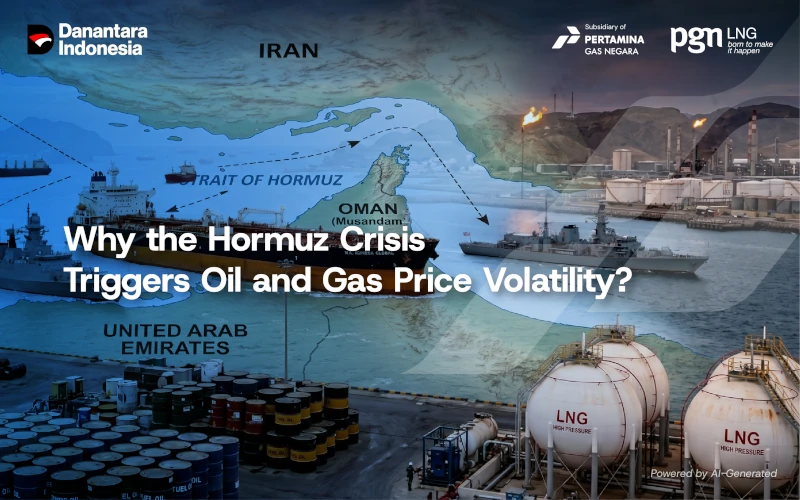
This became evident when the conflict in Iran led to the closure of the Strait of Hormuz, a route responsible for transporting around 20% of the world’s oil supply. The blockade caused global oil supply disruptions and drove sharp increases in both oil and gas prices.
Countries That Depend on the Strait of Hormuz for Energy Trade
Countries in the Gulf region, such as Saudi Arabia, Iraq, Iran, the UAE, Qatar, and Kuwait, rely on the Strait of Hormuz as their primary export route for delivering energy to global markets.
Asia is the main destination for energy flowing from the Persian Gulf. According to an IEA report, China and India absorbed around 44% of all crude oil exports passing through the Strait of Hormuz in 2025. Japan and South Korea are also highly dependent on energy supplies from the strait.
For China, India, Japan, and South Korea, the Strait of Hormuz is not merely a shipping lane, but a critical energy lifeline that supports their industries and power generation systems.
Because of this strategic role, any instability around the Strait of Hormuz can create market uncertainty far beyond the Middle East. The impact can reach energy-importing countries, industrial sectors, and end consumers across Asia.
Read More: 5 Largest Natural Gas Producing Countries in the World
Why Does the Strait of Hormuz Crisis Trigger Oil and Gas Price Volatility?
The Strait of Hormuz is a vital route for global energy distribution, so any disruption in this corridor can directly affect market prices. There are several reasons why this strait has such a significant impact.
Risk of Energy Supply Disruptions
The oil market is extremely sensitive to potential disruptions in the Strait of Hormuz. Considering that around 20% of global oil consumption and one-third of global LNG trade pass through this route, any disruption to tanker traffic immediately triggers price increases in the market.
This happens because energy markets operate based on expectations, not only on physical realities. When geopolitical tensions rise in the Gulf region, traders and speculators tend to take anticipatory positions, pushing prices higher even before actual supply disruptions occur.
Geopolitical Risk Premium Surge
Energy prices are influenced not only by supply and demand but also by market expectations regarding risk. When tensions in the Hormuz region escalate, traders add a risk premium to futures contracts.
A risk premium is an additional pricing component that reflects the possibility of future supply disruptions. As a result, this premium can significantly drive oil prices upward.
Rising Shipping and Insurance Costs
The Strait of Hormuz crisis affects not only crude oil prices but also causes a dramatic increase in logistics costs.
Tanker charter rates rise as operators demand compensation for higher risks, while war risk insurance premiums, special insurance for vessels passing through conflict zones, can multiply within days.
These costs do not stop at shipping operators. Through cost pass-through mechanisms, higher transportation and insurance costs are transferred to refineries, distributors, and ultimately reflected in the energy prices paid by end consumers.
Read More: Types of Fuel Oil That Are Gradually Being Replaced by LNG
What Is the Impact of Rising Energy Prices on Industry and the Economy?
Rising oil and gas prices place direct pressure on energy-intensive industries that rely heavily on fuel and gas as key production inputs. Sectors such as smelters, mining, cement, fertilizer, manufacturing, and power generation face significant increases in operational costs.
When these higher costs cannot be fully passed on to customers, business margins shrink. This condition not only burdens corporate cash flow but also threatens export competitiveness in global markets.
The impact of rising energy prices extends beyond the industrial level and spreads throughout the economy via logistics and distribution channels. Higher fuel prices affect transportation and production costs, which in turn increase the prices of goods and services.
As a result, consumer goods prices and transportation costs rise, putting pressure on public purchasing power.
Read More: 5 Uses of Petroleum and Their Negative Impacts
What Is the Role of Domestic LNG as an Energy Crisis Mitigation Strategy?
Amid global energy price volatility triggered by geopolitical tensions such as the Strait of Hormuz crisis, diversifying energy supply sources has become a strategic necessity rather than merely a backup option.
Domestic LNG has emerged as one of the most practical solutions. By relying on domestically produced liquefied natural gas, industries and power plants can reduce their dependence on imported supplies that are vulnerable to disruptions in international shipping routes.
When global LNG prices surge due to disruptions in the Strait of Hormuz or other shipping routes, domestic supply provides greater price certainty and availability that are less affected by such dynamics.
This is where PGN LNG Indonesia plays an important role in supporting energy security. PGN LNG Indonesia operates in LNG procurement and distribution services.
Supported by continuously developing infrastructure, including regasification facilities and shipping fleets, PGN LNG Indonesia enables industries to access cleaner and more stable energy without relying entirely on fluctuations in the international LNG market.
If you would like to learn more about how the company’s services can support your industrial energy needs, read the full explanation here: LNG Provider in Indonesia.
References
- IEA. Accessed in 2026. Strait of Hormuz Factsheet
- World Bank. Accessed in 2026. Strait of Hormuz Disruption Sends Oil Prices Surging
- Congress. Accessed in 2026. Iran Conflict and the Strait of Hormuz: Impacts on Oil, Gas, and Other Commodities
- Bloomberg. Accessed in 2026. Shipping Insurance Costs to Cross Hormuz Soar After Vessel Attacks