Iran is known as one of the largest oil and gas producers in the Persian Gulf region. The country holds the world’s third-largest oil reserves and the second-largest natural gas reserves. It also plays a critical role in global energy supply, particularly for Asian countries.
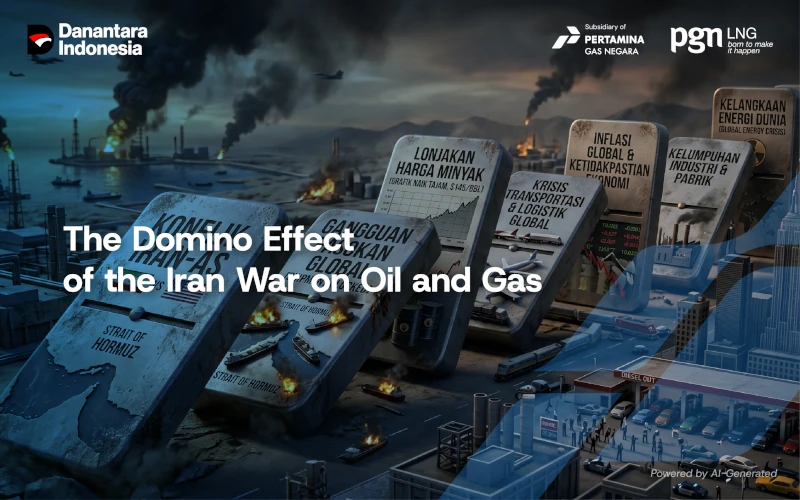
When the United States and Israel launched attacks against Iran on February 28, 2026, Iran responded by closing the Strait of Hormuz. This move triggered a domino effect that not only impacted oil and gas prices, but also disrupted energy supply chains and global economic stability.
What Is Iran’s Position in the Global Oil and Gas Map?
Iran is one of the world’s largest oil producers. According to CEIC Data, Iran’s oil production in 2025 reached a total of 4.19 million barrels per day (bpd), making it the third-largest producer among OPEC countries.
Before the conflict, Iran’s oil exports ranged between 1.38–1.56 million bpd, with China as the sole major buyer, absorbing around 90% of Iran’s oil exports.
In addition to being an energy-producing country, Iran benefits from its geographic position along the Strait of Hormuz, a vital artery for global oil and gas distribution. Around 20 million barrels of crude oil and petroleum products pass through this strait daily, equivalent to 20% of global oil consumption.
Around 20% of global LNG (Liquefied Natural Gas) trade also passes through the same route, mostly originating from Qatar, the world’s second-largest LNG exporter after the United States. Asia receives 84% of oil flows through Hormuz, with China, India, Japan, and South Korea as the main destinations.
Read More: The Role of Hydrocarbons in Making LNG Essential
What Are the Domino Effects of the Iran War on the Global Oil and Gas Industry?
The outbreak of war in Iran, followed by the blockade of the Strait of Hormuz, has significant consequences for global energy supply. The impact goes beyond price fluctuations and spreads across multiple dimensions, harming both industry and the global economy.
Oil Price Surge and Market Volatility
After the blockade of the Strait of Hormuz at the end of February 2026, global oil prices surged sharply. Brent crude oil jumped from around USD 72 per barrel to nearly USD 120 per barrel at its peak.
This spike was driven not only by physical supply disruptions but also by market speculation and rising tanker insurance costs, as the strait became commercially inaccessible.
Impact on Global Economic Growth
Asia is the region most dependent on energy flows through the Strait of Hormuz. China, India, Japan, and South Korea are the four largest importers of oil passing through the strait.
Collectively, these countries account for nearly 40% of global GDP, meaning any disruption to their energy supply can directly affect global economic activity. The crisis could have an even broader impact because these countries are also key pillars of the global manufacturing supply chain, from electronics to automotive industries.
If the energy disruption persists into 2027 and expands further, the IMF warns that global growth could fall to 2%, while inflation could exceed 6%, approaching the threshold of a global recession.
Shock in the Global LNG and Gas Market
The Strait of Hormuz is a critical route for around 20% of global LNG trade, with no viable alternative route. Once the strait became effectively closed in early March 2026, the shock to global gas markets was immediate.
The most visible impact was extreme price volatility. In the first week of the crisis, European gas prices surged by around 76%, while LNG prices in Asia increased by 51%.
In addition, the disruption of gas supply through Hormuz forced importing countries to seek alternative energy sources at significantly higher costs, triggering a short-term energy crisis.
Long-Term Structural Changes in Energy Supply Chains
The blockade of the Strait of Hormuz may trigger long-term structural changes in global energy supply chains, particularly for oil and LNG. Countries that have historically relied on this route will increasingly diversify their supply sources to reduce distribution risks.
This shift is also expected to accelerate investment in alternative export routes and strengthen the attractiveness of energy sources outside the Middle East. LNG producers such as the United States and Australia are likely to benefit from rising demand.
In addition, regional producers like Indonesia also have opportunities to strengthen their position in the global LNG market, especially for Asian countries seeking more stable and geographically closer energy supplies.
Read More: Pros and Cons of Fossil Energy in Transition Era
Why Is Domestic LNG a Solution in the Middle of the Crisis?
Amid global energy market disruptions, Indonesia holds a strategic advantage that many importing countries do not: large domestic natural gas reserves and continuously developing LNG infrastructure.
When global LNG prices surged by 51–76% due to the Strait of Hormuz blockade, industries with secured domestic supply were relatively protected from volatility. This makes domestic LNG not just a cost efficiency option, but a true energy security instrument.
However, reserves alone are not enough. The real challenge lies in distribution—ensuring gas reaches industrial locations not covered by pipeline networks.
PGN LNG Indonesia addresses this challenge by bridging the gap between domestic gas reserves and industrial demand. Through small-scale LNG solutions and flexible regasification infrastructure, PGN LNG Indonesia is able to supply energy to remote industrial locations that are difficult to reach via conventional pipelines.
In times of crisis like this, the presence of a reliable domestic LNG supplier is not only about cost efficiency, but also about ensuring the continuity of national industrial operations.
Want to learn more about what PGN LNG Indonesia offers to support your industry? Find the full explanation here: LNG Provider for Industrial Energy Needs.
References
- IEA. Accessed in 2026. Strait of Hormuz Factsheet
- EIA. Accessed in 2026. The Strait of Hormuz is the world’s most important oil transit chokepoint
- CEIC Data. Accessed in 2026. Iran Crude Oil: Production
- CNBC. Accessed in 2026. A timeline of how the Iran war shook oil prices — and what comes next
- MF. Accessed in 2026. War Darkens Global Economic Outlook and Reshapes Policy Priorities