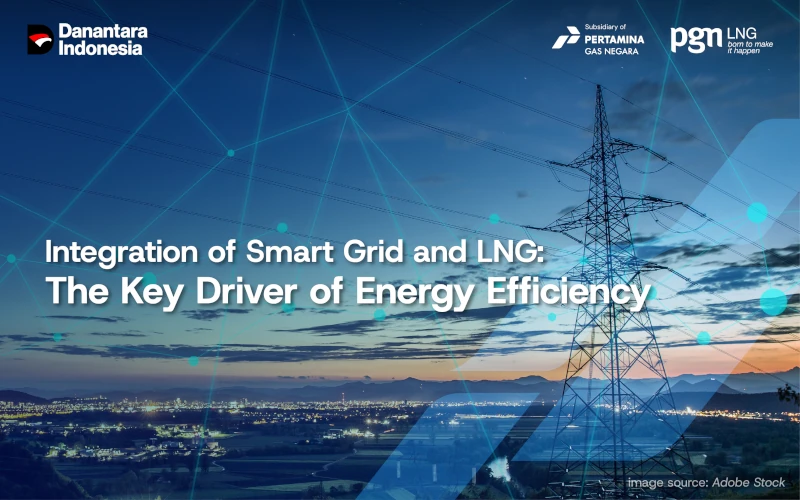
The energy systems of the future must be managed efficiently to address rising demand and limited resources.
However, conventional power systems still face structural limitations that prevent them from achieving optimal energy management. These challenges become even more significant when energy supply relies on fossil fuels, which must be used precisely and efficiently.
Smart grids have emerged as a technology that enables power systems to be managed more intelligently and adaptively. When integrated with LNG-based power generation, can smart grids truly enhance energy efficiency? Let’s explore the facts.
What Is a Smart Grid?
A smart grid is a modern power system that integrates conventional electricity networks with digital technologies, including computer systems, sensors, automation, and two-way communication.
It is designed to monitor and manage electricity flows in real time, improving efficiency, reliability, and grid flexibility.
Through automation and data analytics, smart grids can detect disturbances more quickly, isolate affected areas, and restore power supply more effectively.
In addition, smart grids enable more intelligent balancing of energy supply and demand, including the integration of renewable energy sources.
Read More: Which Petroleum Alternatives Are the Most Environmentally Friendly?
How Does a Smart Grid Work?
Smart grids operate based on two-way communication between power generation, the grid, and consumers.
Unlike conventional one-way power networks, smart grids allow operational data to flow from consumers and distribution networks back to system operators, enabling more accurate and timely decision-making.
These systems are supported by devices such as smart meters, grid sensors, distribution automation equipment, and phasor measurement units (PMUs) on transmission networks.
Real-time data is analyzed using advanced control and analytics systems to optimize power distribution, voltage regulation, and responses to changing load conditions.
Read More: Smart Strategies for Managing Boil-Off Gas
Key Components of a Smart Grid
A smart grid consists of integrated hardware and software components that support intelligent monitoring, communication, and control of power systems.
Its main components include:
- Distributed Energy Resources (DERs): such as renewable power plants and energy storage systems
- Intelligent transmission and distribution networks: including substations equipped with sensors, protection systems, and automated controls
- Digital communication networks: fiber-optic or wireless systems enabling real-time data exchange across the grid
- Smart meters: devices that record detailed electricity consumption and enable two-way communication between customers and operators
- Control and management systems: such as SCADA for grid supervision and AMI for managing customer metering data
The combination of these components allows smart grids to operate more efficiently, reliably, and adaptively under changing system conditions.
Read More: The Process of Global Warming, From the Beginning to Its Impact
Benefits of Smart Grid Implementation
The primary benefits of smart grids include improved efficiency, reliability, and adaptability in evolving energy systems.
Higher Operational Efficiency
Smart grids enhance operational efficiency through dynamic load management, automated voltage control, and advanced network automation.
With real-time monitoring and intelligent control systems, operators can optimize grid operations to reduce technical losses and improve supply reliability.
These optimizations are achieved within existing network constraints, helping minimize energy waste and reduce operating costs more effectively.
Improved Reliability and System Resilience
Smart grids are designed to improve power system reliability and resilience through faster fault detection and automated isolation mechanisms.
When localized disturbances occur, the system can limit the affected area, preventing faults from spreading across the network.
This approach reduces outage duration and scale while improving grid recovery capabilities.
Enabling Renewable Energy Integration
Renewable energy sources such as solar and wind power are inherently intermittent, leading to fluctuations in electricity supply.
Smart grids play a critical role in managing these challenges through real-time monitoring, responsive grid control, and integration with energy storage systems.
They also help balance supply and demand, enabling higher renewable penetration without compromising grid stability and reliability.
Read More: The Process of Global Warming, From the Beginning to Its Impact
Why Is LNG Relevant in Smart Grid Systems?
In smart grid systems with high renewable energy penetration, dispatchable and flexible energy sources are essential to maintain system balance and reliability when renewable output fluctuates.
LNG-based power plants are highly relevant because they can respond quickly to load changes and operate flexibly.
This flexibility makes gas-fired generation a critical support for maintaining grid stability and optimizing smart grid operations.
Read More: The Potential of LNG as Train Fuel, Is It More Efficient?
How Does Smart Grid–LNG Integration Improve Energy Efficiency?
Integrating smart grids with LNG-based power generation enables energy systems to operate more efficiently and responsively.
Smart grids leverage real-time data and advanced analytics to accurately forecast electricity demand, allowing operators to dispatch LNG-fired power plants with greater precision.
As a result, LNG is consumed strictly according to actual demand, reducing fuel waste and improving operational efficiency.
Data integration also enhances LNG supply chain efficiency. Accurate demand signals support better planning of LNG storage, distribution, and asset utilization.
This alignment makes LNG supply systems more flexible, efficient, and fully synchronized with the needs of modern power grids.
References:
- Energy Eropa. Diakses Tahun 2025. Smart grids and Meters
- US Department of Energy. Diakses Tahun 2025. Grid Modernization and the Smart Grid
- Science Direct. Diakses Tahun 2025. Smart Grid Technology
- IEA. Diakses Tahun 2025. Smart Grids