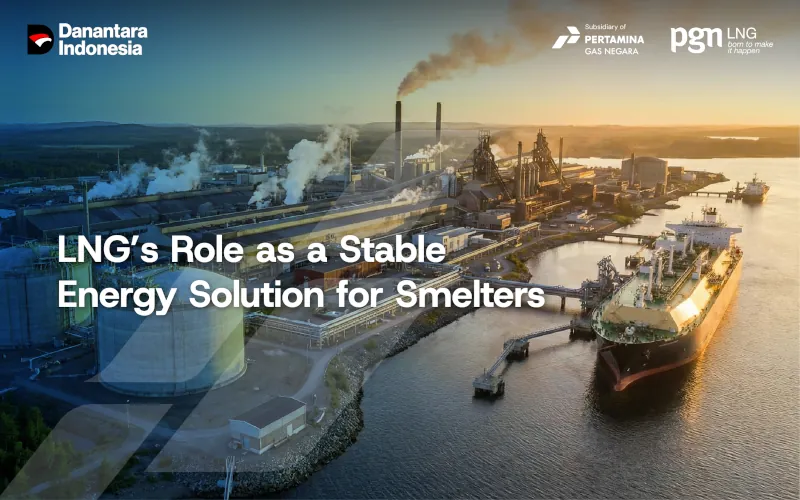
The smelter industry requires a large-scale and highly stable energy supply. Mineral smelting processes operate continuously, meaning facilities must run 24 hours a day without interruption. Even brief disruptions in energy supply can trigger technical failures and lead to significant operational losses.
The challenge is that many smelter facilities are located in remote areas without access to power grids or gas pipelines. As a result, reliable, stable, and flexible energy distribution solutions are essential.
In addressing these challenges, LNG (Liquefied Natural Gas) has emerged as a strategic option, offering a flexible and sustainable energy supply.
What Are the Energy Challenges in Smelter Operations?
Smelter operations in Indonesia face a highly complex energy landscape, ranging from extremely high energy demand to geographical constraints.
Large-Scale Energy Consumption and 24/7 Operations
Mineral smelting requires high temperatures and a constant power supply to maintain furnace stability.
Smelter operations cannot be halted abruptly, as material solidification inside the furnace can severely damage production infrastructure. Therefore, energy stability directly impacts daily output volume and overall production efficiency.
Smelter Locations in Remote Areas
Most smelters are built near mining sites to minimize logistics costs and improve raw material supply chain efficiency. However, these remote locations rarely have access to electricity grids or gas pipelines, creating challenges in advancing mineral downstream processing.
As a result, many smelters rely on captive coal-fired power plants or diesel generators, both of which require significant capital investment and incur high operating costs.
Cost Risks and Uncertainty of Conventional Energy Supply
Dependence on coal and oil exposes operators to volatile energy commodity prices. At the same time, pressure to reduce coal usage continues to intensify.
Smelters that still rely on coal-based power generation face additional challenges, including stricter regulatory requirements and increasing market demand for lower-carbon products.
This combination of price volatility and energy transition pressure creates uncertainty in long-term energy planning. As a result, industry players need to consider alternative energy sources that offer greater stability and sustainability.
Why Are Energy Stability and Accessibility Critical for Smelters?
Energy supply stability is no longer merely an operational requirement. It is a strategic factor that determines a smelter’s competitiveness in the global market.
Smelter facilities rely heavily on a continuous power supply. Even minor disruptions can result in production downtime with serious financial consequences, including potential failure to meet agreed export contracts.
For this reason, the need for stable, cost-predictable energy solutions that are accessible in remote locations has become increasingly critical.
The smelter industry requires an energy partner capable of ensuring supply continuity while supporting the transition toward cleaner and more sustainable energy systems.
Why Is LNG a Stable Energy Solution for the Smelter Industry?
LNG is becoming an increasingly relevant energy solution for smelters with high energy demands. Its primary advantage lies in supply reliability, as LNG can be stored, transported, and utilized consistently.
In addition, LNG has high energy density, enabling it to generate substantial heat and electricity to support energy-intensive smelter operations. This ensures production processes can run steadily without disruption.
From a distribution perspective, LNG offers significant flexibility through liquid delivery via ISO tanks and LNG vessels. This advantage allows smelters in remote or off-grid areas to receive stable and timely energy supply.
With its combination of reliable supply, high energy capacity, and distribution flexibility, LNG provides a solution that supports energy stability while enhancing long-term operational efficiency.
What Is the Role of PGN LNG Indonesia in Supporting Industrial Energy Needs?
PT PGN LNG Indonesia plays a key role in developing and managing LNG infrastructure to support industrial energy needs, including those of smelters. We focus on optimizing the utilization of domestic LNG as part of broader efforts to expand access to more efficient and relatively lower-emission energy sources compared to conventional fuels.
We ensure that gas supply is effectively distributed to economic growth centers, including industrial estates and mineral downstream processing facilities located in areas with limited energy infrastructure.
With experience in regasification facility management and LNG distribution, we act not only as an energy provider but also as part of the ecosystem supporting national gas supply resilience.
Synergy within the Pertamina Group further strengthens supply chain coordination, enabling industrial energy needs to be planned and fulfilled in a more integrated and sustainable manner.
What Integrated LNG Solutions Does PGN LNG Offer for the Smelter Industry?
PGN LNG Indonesia offers integrated solutions specifically designed to address the technical challenges of the smelter industry.
LNG Supply and Distribution for Industrial-Scale Needs
PGN LNG Indonesia supplies and distributes LNG for industrial requirements through flexible supply schemes, particularly for power generation within smelter complexes.
This logistical support enables energy delivery to remote areas, ensuring industrial operations remain stable and sustainable.
Infrastructure Support and Operational Management
Our support includes LNG facility management, from regasification points to distribution to production units. With strong technical expertise, we provide customized solutions tailored to each client’s energy load requirements.
This ensures operational efficiency and supply reliability, allowing smelter operators to focus on their core production processes.
Safety and Compliance Standards
Safety and regulatory compliance are top priorities in LNG handling, with strict procedures implemented in accordance with national and international standards.
All operational aspects are managed through comprehensive risk management practices to minimize potential technical disruptions and safety risks. This ensures that energy distribution to smelter facilities is safe, reliable, and capable of protecting both infrastructure and personnel.
What Makes PGN LNG Indonesia a Strong Energy Partner?
PGN LNG Indonesia’s strength lies not only in long-term supply reliability but also in its credibility as part of a state-owned enterprise with experience in large-scale energy projects. This provides stability and confidence for industries seeking sustainable energy solutions.
The synergy and collaboration established by PGN LNG Indonesia play an important role in optimizing domestic LNG utilization. With extensive networks and capabilities, we deliver efficient and adaptive energy solutions tailored to the needs of various industrial sectors.
Our strategic partnership approach goes beyond energy provision, focusing on long-term collaboration to enhance operational efficiency and strengthen customer energy resilience.
With integrated energy solutions, PGN LNG Indonesia stands as a reliable, flexible, and long-term energy partner, capable of addressing energy challenges in both major industrial hubs and remote regions.
To obtain reliable and sustainable LNG energy solutions for your smelter operations, consult with our team today: Contact PGN LNG Indonesia.