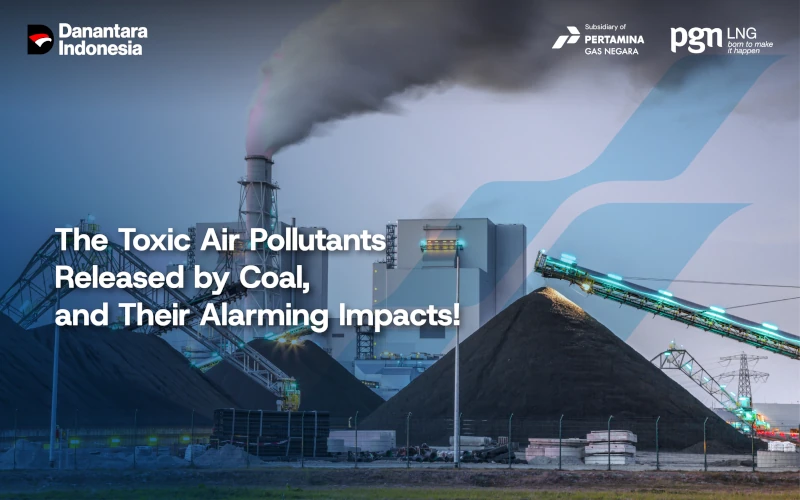
Coal remains a key pillar of national energy supply today. Despite its significant contribution, coal combustion is also responsible for producing some of the highest levels of air pollutants.
These pollutants pose serious health risks, as they are closely linked to respiratory illnesses and cardiovascular disease. To reduce these risks, it is becoming increasingly urgent to transition toward cleaner energy sources that can still support a reliable and stable energy supply.
So, what’s the solution? Find out in this article.
What Are Air Pollutants?
Air pollutants are chemical, physical, or biological substances present in the atmosphere that cause harmful effects on human health and the environment.
While some pollutants originate from natural sources such as volcanic eruptions, the majority in today’s context stem from human activities, particularly the combustion of fossil fuels.
Within the energy sector, coal-fired power plants are among the largest contributors to air pollution emissions and are frequently linked to millions of premature deaths worldwide each year.
This is why understanding industrial emissions is a critical component of efforts to protect public health and the environment.
Read More: Can Gas Fuel Reduce Coal Pollution? Here’s the Fact
What Types of Air Pollutants Are Produced by Coal Combustion?
The combustion of coal generates a wide range of air pollutants that are harmful to both human health and the environment, including:
Carbon Dioxide (CO₂)
Carbon dioxide is the most dominant greenhouse gas produced by human activities. Compared to other fossil fuels, coal combustion generates the highest CO₂ emissions per unit of energy.
The accumulation of CO₂ in the atmosphere, alongside other greenhouse gases, is a primary driver of global warming and climate change.
Carbon Monoxide (CO)
Carbon monoxide is formed through incomplete combustion. This gas is colorless and odorless, making it particularly dangerous.
CO has a much stronger affinity for hemoglobin than oxygen, preventing oxygen from being efficiently transported throughout the body.
Exposure to carbon monoxide can cause severe respiratory distress, loss of consciousness, and, in extreme cases, death.
Sulfur Dioxide (SO₂)
Sulfur dioxide is released when sulfur-containing coal is burned. It is a major contributor to acid rain and becomes corrosive when reacting with atmospheric moisture.
SO₂ exposure also poses serious health risks, particularly irritation and damage to the respiratory system.
Read More: Is the AGRU the Key to Successful LNG Production?
Nitrogen Oxides (NOx)
Nitrogen oxides are primarily formed during high-temperature combustion, originating from both atmospheric nitrogen and nitrogen compounds present in the fuel.
These gases play a key role in the formation of photochemical smog and ground-level ozone through complex atmospheric reactions.
Exposure to NOx and tropospheric ozone can damage lung tissue and trigger or worsen asthma attacks.
Fine Particulate Matter (PM2.5 and PM10)
Fine particulate matter consists of microscopic solid or liquid particles generated during coal combustion.
PM2.5 particles are small enough to penetrate deep into the lungs and enter the bloodstream, potentially triggering systemic inflammation.
Long-term exposure to PM2.5 significantly increases the risk of chronic respiratory disease, heart disease, and premature death. PM10 particles primarily affect the upper respiratory tract.
Mercury, Arsenic, and Lead
Coal combustion releases various hazardous heavy metals, including mercury, arsenic, and lead. These metals can disperse through the air or attach to ash particles.
Mercury is a potent neurotoxin that can accumulate in the food chain, while arsenic is classified as a carcinogen with heightened health risks from long-term exposure.
The presence of these toxic pollutants further amplifies the serious health and environmental consequences of coal use.
Read More: Why Is the FSU a Game Changer in the LNG Industry?
What Are the Negative Effects of Air Pollutants?
Air pollutants create a domino effect that harms multiple aspects of life, ranging from human health and the environment to economic and social well-being.
Impacts on Human Health
Chronic exposure to pollutants from coal combustion significantly increases the risk of health disorders, particularly respiratory diseases such as chronic bronchitis and Chronic Obstructive Pulmonary Disease (COPD).
Fine particulate matter has also been shown to raise the risk of cardiovascular disease, stroke, and lung cancer.
Children and the elderly are especially vulnerable, as poor air quality can accelerate the decline of lung function in these populations.
Environmental Impacts
SO₂ and NOx emissions from coal combustion contribute to acid rain, which degrades soil fertility and disrupts freshwater ecosystems by lowering pH levels and releasing toxic heavy metals.
Meanwhile, CO₂ emissions intensify global warming, accelerating polar ice melt and increasing the frequency and severity of extreme weather events worldwide.
Over time, these pollutants cause lasting damage to ecosystems and wildlife habitats.
Economic and Social Impacts
High pollution levels increase public healthcare costs and reduce economic productivity due to pollution-related illnesses.
Communities living near industrial and power generation areas often experience a decline in quality of life due to continuous exposure to air pollution.
Read More: The Truth Behind Biogas, Sustainable Energy or Hidden Risk?
Transitioning to LNG to Reduce Air Pollution
As part of efforts to mitigate air pollution, transitioning from coal to cleaner fuels is a critical step, one of which is Liquefied Natural Gas (LNG).
LNG is natural gas that has been cooled to approximately –160°C, allowing it to be transported and stored more efficiently at large scale.
In power generation, LNG delivers clear environmental advantages:
- 40–50% lower CO₂ emissions compared to coal
- Near-zero sulfur (SO₂) and fine particulate (PM2.5) emissions
- Lower NOx emissions
These benefits position LNG as a practical solution for significantly reducing air pollution associated with coal combustion.
Moreover, LNG can be delivered to regions not connected to gas pipelines via tanker ships or ISO tanks. This makes LNG not only a reliable energy supply option but also a strategic tool for lowering air pollution and carbon emissions while maintaining energy security.
References
- U.S. Environmental Protection Agency (EPA). Accessed 2025. Power Plants and Neighboring Communities
- U.S. Energy Information Administration (EIA). Accessed 2025. Electric Power Sector CO₂ Emissions Drop as Generation Mix Shifts from Coal to Natural Gas
- World Health Organization (WHO). Accessed 2025. Air Pollution
- Centre for Research on Energy and Clean Air (CREA). Accessed 2025. Air Quality, Health and Toxic Impacts of Coal Power and Coal Mining in Coahuila, Mexico
- Health Care Without Harm (HCWH). Accessed 2025. Scientific Evidence of Health Effects from Coal Use in Energy Generation