Today, the world is facing a climate crisis that has triggered various forms of environmental damage. One of the main contributors comes from fuel usage in the transportation and industrial sectors.
As awareness of the importance of more sustainable energy continues to grow, many countries are beginning to push for a transition toward cleaner energy sources and fuels.
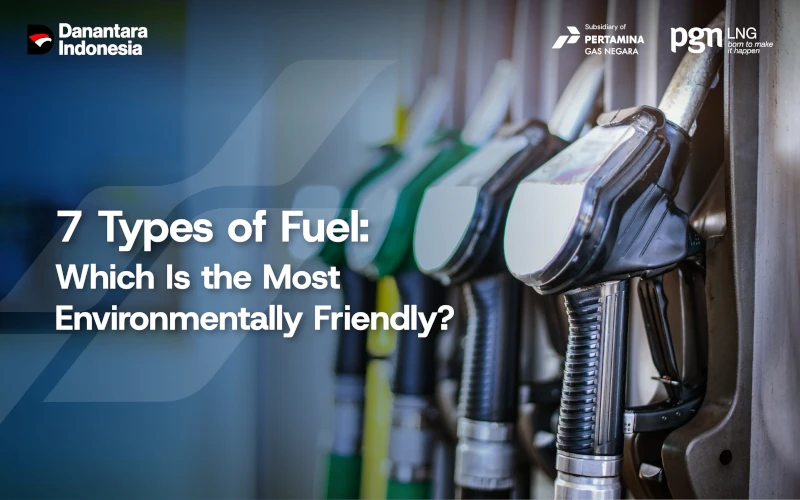
So, what types of fuel are commonly used today, and which ones are more environmentally friendly? Find the answers in this article.
What Is Fuel?
Fuel is a substance or material capable of releasing energy through a reaction, generally a chemical reaction such as combustion. The energy stored in fuel is chemical energy, which, when released, produces heat energy.
This heat energy can then be further converted into mechanical energy or electrical energy through various systems, such as internal combustion engines, turbines, or power plants.
This conversion process enables fuel to be used to power vehicles, industrial machinery, and electricity systems.
Today, fuel selection is no longer determined solely by its ability to generate power, but also by considerations such as energy efficiency, production costs, infrastructure availability, and environmental impact.
Read More: The Best Alternatives to Petroleum
What Types of Fuel Are Commonly Used Today?
Currently, there are many types of fuel in use, ranging from conventional fuels to alternative options.
1. Gasoline (Petrol)
Gasoline is a liquid petroleum-based fuel produced through fractional distillation and various downstream processes such as reforming and blending to meet performance and emission standards.
This fuel is used in internal combustion engines with spark ignition systems, which is why it remains the primary choice for land transportation.
Globally, gasoline is one of the most important energy commodities in the transportation sector, supported by a well-developed and stable distribution infrastructure.
2. Diesel Fuel
Diesel is a petroleum-based fuel with longer hydrocarbon chains and higher energy density per liter compared to gasoline.
The combination of diesel fuel with diesel engines, which operate using high compression without spark ignition, delivers good thermal efficiency and high torque at low engine speeds.
These characteristics make diesel the preferred choice for heavy transportation, marine vessels, and industrial machinery that require durability, efficiency, and consistent performance under heavy loads.
Read More: Does Alternative Energy Have Drawbacks?
3. LPG (Liquefied Petroleum Gas)
LPG is a liquefied light hydrocarbon fuel, typically a mixture of propane and butane, obtained from crude oil refining processes and natural gas processing.
Thanks to its high calorific value and its ability to be stored in moderately pressurized cylinders, LPG is widely used as a household cooking fuel and by small industries for heating purposes.
4. CNG (Compressed Natural Gas)
CNG is a natural gas–based fuel dominated by methane and compressed to significantly reduce its volume for storage purposes.
This fuel has been widely used in public transportation and industrial fleets due to its cleaner combustion compared to gasoline and diesel.
The main advantage of CNG lies in its much lower particulate emissions, sulfur content, nitrogen oxides, and CO₂ emissions, making it one of the fuel options for improving air quality in urban areas.
Read More: Can Natural Gas Really Run Out?
5. Biofuel (Biodiesel & Bioethanol)
Biofuel is a renewable fuel produced from organic materials such as energy crops and biomass waste.
Compared to fossil fuels, biofuels have the potential to produce lower carbon emissions when viewed from a life cycle perspective, although their environmental impact depends heavily on production methods and land-use practices.
Biofuels can also be blended with diesel or gasoline up to certain percentages without major engine modifications, making them a viable option for reducing dependence on fossil fuels.
6. Hydrogen
Hydrogen is a fuel that can be produced through various methods with different emission levels, including:
- Grey hydrogen derived from natural gas
- Green hydrogen produced through water electrolysis using renewable energy
When used as an energy source, hydrogen produces no carbon emissions and releases only water vapor.
However, its environmental impact depends heavily on the production process, which is why green hydrogen is considered the most promising option for supporting net-zero emission targets across global energy and industrial sectors.
7. LNG (Liquefied Natural Gas)
LNG is natural gas that has been liquefied by cooling it to approximately −160°C, significantly reducing its volume and making it more efficient for long-distance transportation using specialized tanker vessels.
This liquid form increases energy density per unit volume, making LNG an important option for power generation and large-scale industrial applications.
In addition, LNG is increasingly used in the maritime sector because it produces lower carbon emissions during combustion compared to coal and oil.
Read More: What’s the Difference Between LPG and LNG?
Which Type of Fuel Is the Most Environmentally Friendly?
Determining how environmentally friendly a fuel is requires consideration of multiple factors, including CO₂ emissions, air pollutants (such as NOx and sulfur), life cycle assessment (LCA) impacts, and the risk of methane leakage for gas-based fuels.
This approach helps provide a more comprehensive view of a fuel’s actual impact on the climate and overall air quality.
Based on these parameters, the following is a ranking of fuel types from the most environmentally friendly to the most polluting:
- Hydrogen (green hydrogen): The most environmentally friendly at the point of use because it produces no CO₂ emissions, provided it is produced using renewable energy.
- Biofuels: Renewable and potentially able to reduce carbon emissions, although their impact depends heavily on production methods and land use.
- CNG & LNG: The cleanest fossil fuels, with low sulfur and particulate emissions, although they still carry the risk of methane leakage.
- LPG: Cleaner than gasoline and diesel, but still contributes to carbon emissions.
- Gasoline & Diesel: The least environmentally friendly due to high greenhouse gas emissions and urban air pollution.
Read More: 5 Benefits of Solar Energy That Fossil Fuels Don’t Have
What Is the Potential of LNG as a Fuel?
LNG has significant potential as a transitional fuel in the industrial, power generation, and transportation sectors because its combustion produces lower particulate, sulfur, and carbon emissions compared to coal and petroleum.
In the industry, LNG is widely used for power generation and thermal processes such as boilers and kilns that require a stable and reliable heat supply.
In the maritime sector, LNG is increasingly adopted as an alternative fuel to comply with IMO 2020 sulfur emission regulations, while its use in rail transportation remains limited to pilot projects.
For long-distance land transportation, LNG offers the advantage of a longer driving range compared to CNG due to its higher energy density per unit volume.
References:
- EIA. Accessed in 2025. Gasoline Explained
- EIA. Accessed in 2025. What Is Diesel Fuel?
- ICCT. Accessed in 2025. The Climate Implications of Using LNG as a Marine Fuel
- IEA. Accessed in 2025. Low-Emissions Fuels