Air pollution has become one of the most serious environmental problems faced by modern society, particularly in urban areas and industrial zones. Without realizing it, everyday activities such as driving, energy consumption, and household chores all contribute to the declining quality of the air we breathe.
The impacts are far from trivial, ranging from health problems and environmental degradation to increased regulatory pressure on businesses. To better understand this environmental issue, let’s explore common examples of air pollution, the types of pollutants involved, and alternative energy solutions that can help reduce the risks.
What Are Common Examples of Air Pollution?
Air pollution appears in many forms and often originates from human activities that we consider routine. Below are some of the most common examples:
Air Pollution from Motor Vehicles
In major cities such as Jakarta, New York, or Delhi, vehicle exhaust emissions are one of the leading contributors to air pollution. Internal combustion engines release a mixture of harmful gases into the atmosphere, including carbon monoxide (CO), nitrogen dioxide (NO₂), and particulate matter.
Severe traffic congestion worsens the situation, as engines operate inefficiently during idling or stop-and-go conditions, increasing pollutant concentrations at street level.
Air Pollution from Industrial Activities
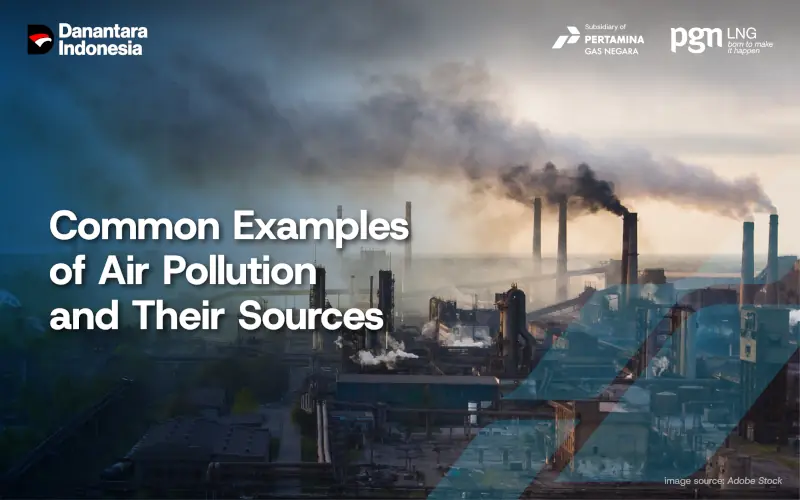
The industrial sector, including manufacturing plants and coal-fired power stations, releases large-scale emissions through smokestacks.
Burning coal to power industrial machinery produces soot, sulfur dioxide (SO₂), and nitrogen oxides (NOx), which can be carried by wind and pollute areas far from the source.
Air Pollution from Open Burning
Activities such as open burning of household waste and land clearing by fire are still common, particularly in the agricultural sector. These practices generate thick smoke containing hazardous fine particles.
On a regional scale, land burning can lead to transboundary haze, reducing visibility and triggering widespread respiratory health crises.
Air Pollution from Household Activities
Air pollution does not only occur outdoors but also indoors. Common examples include:
- The use of solid fuels such as firewood or charcoal for cooking
- The use of chemical cleaning products and aerosol sprays
These activities release harmful compounds into indoor air. Without proper ventilation, indoor air pollution can become more toxic and pose greater health risks than outdoor air.
Read More: The Benefits of Coal and Its Risks
What Types of Air Pollutants Exist?
Several types of air pollutants produced by human activities include:
- Particulate Matter (PM2.5 and PM10): Extremely fine particles that can penetrate deep into the lungs and even enter the bloodstream.
- Carbon Monoxide (CO): A colorless, odorless gas produced by incomplete combustion. It is highly toxic as it interferes with the blood’s ability to transport oxygen throughout the body.
- Nitrogen Dioxide (NO₂) and Sulfur Dioxide (SO₂): Gases produced from fossil fuel combustion that are major triggers of respiratory irritation and acid rain formation.
- Tropospheric Ozone (O₃): Unlike ozone in the upper atmosphere that protects the Earth, ground-level ozone is a secondary pollutant formed through chemical reactions under sunlight.
- Volatile Organic Compounds (VOCs): Chemicals that easily evaporate from sources such as paints, industrial solvents, and gasoline, contributing to smog formation.
These substances are the main drivers of air pollution and can cause various health problems when humans are exposed to them.
Read More: Why the Energy Crisis Poses a Serious Threat to the Global Economy?
What Are the Main Sources of Air Pollution?
In general, air pollution sources can be classified into four main categories:
- Mobile sources: Primarily land, sea, and air transportation activities
- Stationary sources: Power plants, manufacturing facilities, oil refineries, and waste treatment plants that emit pollutants continuously
- Natural sources: Volcanic eruptions releasing ash and sulfur gases, as well as desert dust carried by wind into populated areas
- Energy sector: One of the largest contributors to air pollution, especially from coal- and oil-based electricity generation
What Are the Impacts of Air Pollution on Health and the Environment?
Scientific evidence shows that air pollution significantly increases the risk of cardiovascular disease, stroke, chronic asthma, and lung cancer. Children and the elderly are among the most vulnerable groups.
From an environmental perspective, pollutants such as sulfur dioxide (SO₂) contribute to acid rain, which damages freshwater ecosystems and forest vegetation. These pollutants can also reduce soil fertility by altering pH levels.
For businesses, air pollution poses a serious threat to profitability and long-term sustainability. Poor air quality increases employee health risks, leading to reduced productivity.
Companies also face growing regulatory pressure, including:
- Carbon taxation
- Euro 4/5 emission standards
- Investor demands to meet environmental, social, and governance (ESG) criteria
Ignoring air pollution issues exposes businesses to significant legal and reputational risks.
Read More: The Effects of Air Pollution on Our Health and the Environment
How Does LNG Help Reduce Air Pollution?
One relatively practical solution to reducing air pollution in the energy and industrial sectors is transitioning to cleaner fuels, such as Liquefied Natural Gas (LNG).
The relationship between air pollution and fuel type is closely linked, as solid fuels like coal release large amounts of particulate matter and sulfur compounds when burned.
LNG offers a much cleaner emissions profile compared to coal and petroleum. Its use can reduce particulate matter emissions to near zero and cut sulfur dioxide (SO₂) emissions by more than 90%.
In power generation and industrial operations, LNG also helps reduce nitrogen oxide (NOx) formation, one of the key contributors to urban smog.
For businesses, adopting LNG is a strategic step toward achieving sustainability targets while meeting national air quality standards without disrupting operations.
With lower carbon intensity than coal and oil, LNG is widely regarded as a realistic bridge toward a cleaner and healthier energy system.
References:
- WHO. Accessed in 2026. Ambient (outdoor) air pollution
- EPA. Accessed in 2026. Environments and Contaminants – Criteria Air Pollutants
- Kemkes. Accessed in 2026. Bahaya Polusi Udara bagi Kesehatan: Dampak, Penyebab dan Pencegahannya