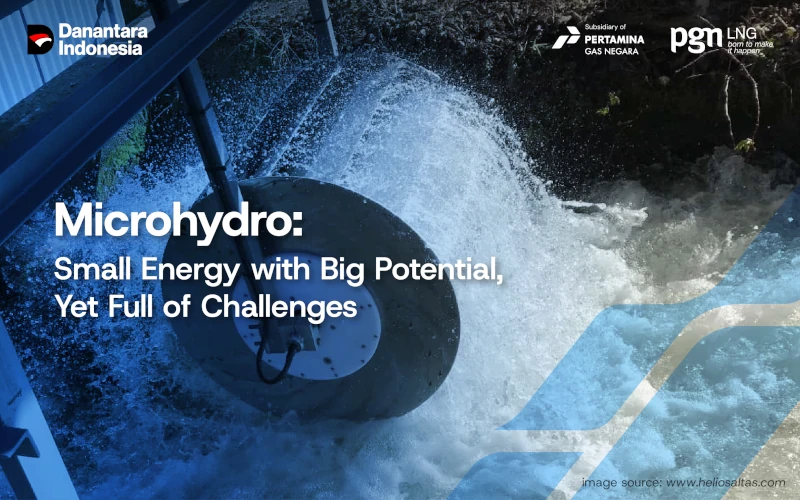
Indonesia’s hilly topography and extensive river systems hold significant potential for renewable energy solutions, particularly for communities that remain beyond the reach of the main electricity grid.
One such solution is microhydropower. Despite its small capacity, microhydropower has proven effective in expanding energy access to remote communities.
What Is Microhydropower?
Microhydropower refers to small-scale hydropower systems that generate electricity by harnessing the kinetic energy and elevation differences of flowing water.
In general, microhydropower plants have capacities of less than 100 kW (kilowatts), while systems with capacities above that, up to around 1 MW (megawatts), are typically classified as minihydropower.
With relatively simple designs and the use of local resources, microhydropower systems are particularly well-suited for remote communities and areas that are not connected to the main electricity grid.
Read More: Tidal Energy, Green Technology from Ocean Waves
How Does Microhydropower Work?
The operation of a microhydropower system is determined by two main factors:
- Water head (the vertical drop)
- Water flow rate
The elevation difference between the water source and the turbine creates pressure, while the flow rate determines the amount of energy that can be harnessed.
Water is channeled through canals and a penstock toward the turbine, where the flowing water spins turbine blades connected to a generator, producing electricity.
These systems are commonly deployed in areas with relatively stable year-round water flow, such as mountainous regions or areas with high rainfall, making microhydropower a reliable renewable energy source.
Read More: Is Geothermal Energy a Green Solution or Still Hiding Risks?
What Is the Difference Between Large Hydropower and Microhydropower?
Both large hydropower plants and microhydropower systems rely on water as an energy source, but they differ significantly in scale and infrastructure.
Large hydropower plants typically operate at medium to large capacities, often using dams and reservoirs or large run-of-river schemes. Their capacities range from tens to thousands of megawatts, and large-scale projects may have more substantial environmental impacts.
In contrast, microhydropower operates on a much smaller scale, with capacities below 100 kW. These systems usually do not require large dams, relying instead on small weirs or diversion structures.
As a result, microhydropower has a much lower environmental footprint and is primarily designed to meet the energy needs of local communities.
Read More: Wind Energy vs Fossil Fuels, The Facts and Figures!
What Are the Advantages of Microhydropower?
Although microhydropower produces relatively modest amounts of electricity, it offers several advantages over fossil fuel–based energy sources:
A Stable Renewable Energy Source
Microhydropower is relatively more stable than solar or wind energy because it utilizes water flows that are often available throughout the year.
While output can still be affected by seasonal variations in water flow, microhydropower generally delivers more consistent electricity, especially in locations with reliable water resources.
Easy Maintenance and Low Technology Requirements
Microhydropower systems use simple, robust components, making them easier to maintain without reliance on advanced technology.
This is particularly beneficial for remote areas, where access to technicians and spare parts can be limited. With proper training, routine maintenance can often be handled by local communities.
Low Environmental Impact
Because microhydropower does not require large dams that flood extensive areas, its environmental impact is significantly lower.
Run-of-river diversion systems preserve most river ecosystems and cause minimal disruption to aquatic habitats.
Low Operating Costs
Once the initial construction investment is completed, microhydropower systems have relatively low operating costs, as they do not require fuel and only need routine maintenance.
Although water availability may fluctuate seasonally, the long service life of microhydropower systems makes them an economically viable and sustainable energy solution over the long term.
Read More: Can Gas Fuel Reduce Coal Pollution? Here’s the Fact
What Challenges Does Microhydropower Face?
Despite its potential, microhydropower also faces several implementation challenges:
Dependence on Water Flow
One of the main challenges of microhydropower is its heavy dependence on water flow. During prolonged dry seasons or shifts in rainfall patterns, electricity production can decline significantly or even stop temporarily.
This risk can affect supply reliability for communities that rely solely on microhydropower, particularly if no backup energy source is available.
Limited Generation Capacity
With capacities typically below 100 kW, microhydropower is not designed to meet the energy demands of large industrial facilities or metropolitan areas.
Its primary role is to serve rural communities and social facilities, while also supporting small-scale productive activities such as cottage industries.
Limited Suitable Locations
Not all regions possess the necessary combination of water head and flow rate required to operate microhydropower systems effectively.
This technology depends on specific hydrological conditions, such as sufficient elevation differences and stable water flow, limiting its application to locations with suitable natural characteristics.
Read More: Nuclear Power, A Path to Progress or Full of Risks?
How Can LNG Help Address Microhydropower’s Challenges?
When microhydropower output declines due to dry seasons or technical disruptions, electricity systems require a reliable backup source.
In this context, gas-fired power generation using LNG (Liquefied Natural Gas) can complement microhydropower by providing flexible additional power.
LNG-based gas power plants can compensate for supply shortfalls when water flow decreases or when microhydropower systems experience downtime, while also meeting energy demand beyond microhydropower capacity.
Compared to diesel generators commonly used in remote areas, LNG offers a cleaner and more efficient backup option. Small-scale LNG solutions also enable energy supply without the need to build extensive gas pipeline infrastructure.
References:
- Kementerian ESDM. Accessed 2025. Geliat Pemuda Bangsa Terangi Desa dari PLTMH
- Kementerian ESDM. Accessed 2025. Buku Pedoman Pengelolaan Lingkungan Hidup Bidang Pembangkit Listrik Tenaga Mikro Hidro
- U.S. Department of Energy. Accessed 2025. Microhydropower Systems