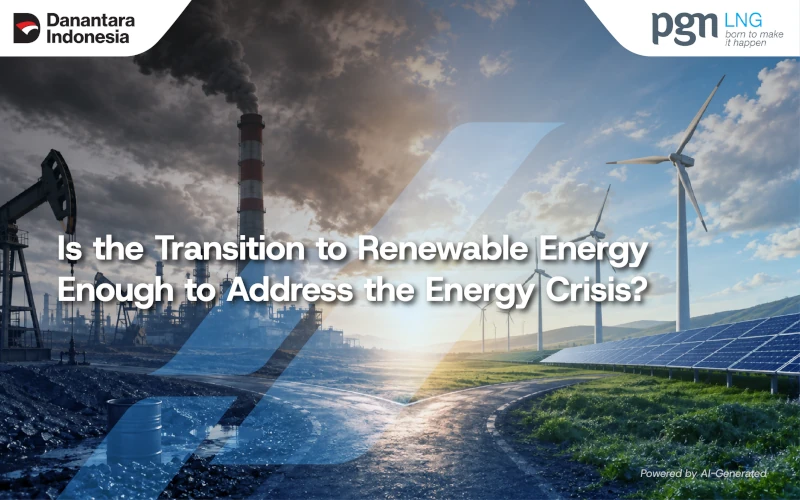
An energy crisis can emerge when energy needs continue to grow while the energy system faces risks to supply availability and reliability. These risks can be triggered by dependence on certain energy sources, supply chain disruptions, geopolitical dynamics, and energy price surges.
For this reason, diversifying supply sources and the ability to withstand disruptions are important parts of energy security.
Transitioning to renewable energy has the potential to reduce dependence on fossil energy. Indonesia’s Ministry of Energy and Mineral Resources notes that Indonesia’s renewable energy potential reaches around 3,687 GW. So, is this potential large enough to meet Indonesia’s energy needs and help overcome the energy crisis?
How Can the Energy Crisis Be Addressed Amid Dependence on Fossil Energy?
An energy crisis can put pressure on industrial operational activities, especially when supply disruptions or rising energy prices affect production costs and operational reliability.
For this reason, addressing these risks is not simply a matter of adding energy supply, but also requires steps to control energy needs, reduce dependence on certain sources, and strategically utilize available resources.
Improving Efficiency and Controlling Energy Consumption
One way to reduce pressure on energy supply is to curb inefficient energy use, not just increase the amount of supply. Energy efficiency can be achieved through the use of more efficient technology, optimization of operational processes, and reduction of unnecessary energy consumption.
For industry, more efficient energy use can help reduce the energy needed to run operational activities while also lowering energy costs. As such, improving efficiency can reduce pressure on energy supply needs without having to rely on increasing consumption.
Diversifying Energy Sources
Excessive dependence on a single energy source can increase risks when supply disruptions or price changes occur. For this reason, diversification is carried out by utilizing various energy sources in the energy mix, so that needs are not entirely dependent on a single type of source.
For Indonesia, which still has dependence on fossil energy, diversification is one of the approaches to strengthening energy security while also opening up room for the utilization of alternative energy sources, including renewables.
Optimizing Domestic Energy Sources
Utilizing energy sources available domestically can help reduce vulnerability to external supply disruptions. Indonesia has a variety of domestic energy sources, both fossil and renewable, that can be utilized to support national energy needs.
However, optimizing domestic energy sources does not mean maintaining dependence on fossil energy, but rather utilizing various sources strategically in accordance with the characteristics and needs of the energy system.
Read More: 7 Types of Fuel: Which Is the Most Environmentally Friendly?
How Much Can Renewable Energy Meet Energy Needs?
Renewable energy can serve as both an alternative energy source and a means of diversifying Indonesia’s energy mix. The variety of renewable energy sources available domestically provides opportunities to reduce dependence on fossil energy.
Indonesia’s Ministry of Energy and Mineral Resources records Indonesia’s renewable energy potential at around 3,687 GW, consisting of:
- Solar energy: 3,294 GW
- Wind energy: 155 GW
- Water energy: 95 GW
- Ocean energy: 63 GW
- Bioenergy: 57 GW
- Geothermal energy: 24 GW
The scale and diversity of this potential show that Indonesia has renewable energy sources that can be developed to support energy needs while also strengthening supply diversification.
However, the scale of this potential does not yet show how much renewable energy has actually met national energy needs.
To see the actual conditions, Indonesia’s primary energy mix provides a more relevant picture. In 2025, renewable energy contributed around 15.75% of the national primary energy mix, while the remainder came from coal at 42.08%, petroleum at 27.03%, and natural gas at 15.13%.
This means renewable energy is already part of the national energy supply, but fossil energy still meets most of the energy needs.
This condition shows that Indonesia’s renewable energy potential of 3,687 GW still has significant room for development to increase its contribution to the energy mix. Moreover, the total installed renewable energy generation capacity has only reached 15,630 MW to date, according to Indonesia’s Ministry of Energy and Mineral Resources data as of December 2025.
Read More: The Benefits of Non-Renewable Energy That Are Hard to Replace
Is Renewable Energy Alone Enough to Overcome the Energy Crisis?
Renewable energy is an important part of the solution to the energy crisis, but it is not yet sufficient to serve as the sole energy source. Indonesia has large and diverse renewable energy potential, but its contribution to the primary energy mix was still only 15.75% in 2025.
For this reason, increasing the use of renewable energy needs to proceed alongside the development of supporting infrastructure, such as electricity networks and energy storage, as well as system management capable of handling fluctuations in production from sources such as solar and wind.
A more realistic approach is to build a diversified energy mix, with renewable energy continuously increasing while maintaining other energy sources that can keep supply reliable as long as renewable energy capacity and infrastructure have not yet fully developed.
With this combination, the energy system does not depend on a single source and has supply options when renewable energy production fluctuates or energy needs increase.
In the context of this transition, LNG (Liquefied Natural Gas) can be one of the energy sources that supports system reliability, especially while renewable energy development and its supporting infrastructure are still underway.
Read More: 5 Crucial Uses of Crude Oil and Its Impacts
How Can LNG Complement Renewable Energy During the Transition?
During the energy transition, LNG can serve as one of the complementary energy sources while renewable energy utilization continues to be developed. Energy sources such as solar and wind have production that depends on natural conditions, so their supply can change over time.
Meanwhile, industrial energy needs still have to be continuously met. Under these conditions, LNG can help provide energy supply when renewable energy production is insufficient, so that supply reliability remains maintained.
This role means LNG is not a replacement for or competitor to renewable energy, but rather part of the energy mix during the transition process.
To be able to carry out this role, LNG needs to be supported by a supply chain that allows energy to be made available and channeled to locations that need it. This covers various needs, from LNG procurement, storage, and distribution to the regasification process before use.
PGN LNG Indonesia supports these needs through integrated LNG services to help meet industrial energy needs across various locations.
Learn more about the LNG solutions suited to your industry’s energy needs here: LNG Partner Provider in Indonesia.
References
- ESDM. Accessed 2026. Performance Report of the Directorate General of New, Renewable Energy and Energy Conservation 2025
- ESDM. Accessed 2026. Strengthening Energy Security, Indonesia and Germany Accelerate Renewable Energy Investment and Electricity Networks
- ESDM. Accessed 2026. Renewable Energy Mix in the Electricity Sector Exceeds National Electricity Plan Target
- IEA. Accessed 2026. 2026 Energy Crisis Policy Response Tracker
- PMC. Accessed 2026. Strategies to save energy in the context of the energy crisis: a review