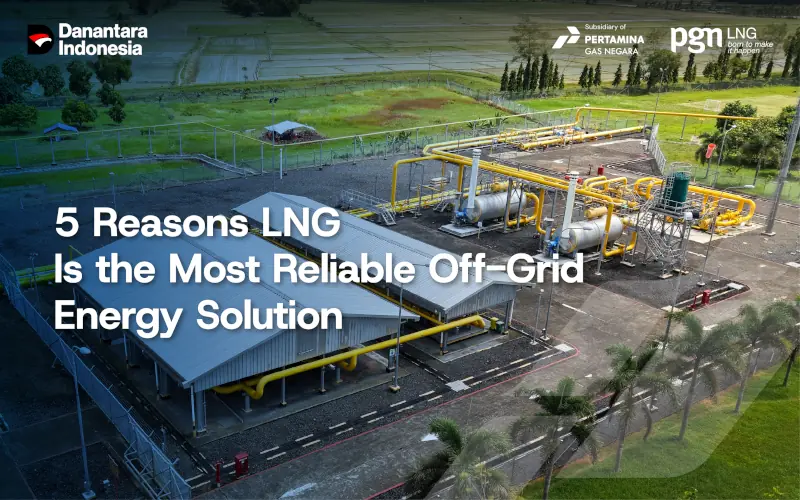
Energy demand is not limited to areas located near power plants. Remote regions also require an adequate energy supply to support human activities and economic growth.
Unfortunately, many of these locations are still not connected to the national power grid. As a result, such areas need independent solutions to ensure the continuity of their energy supply. This is where off-grid systems play a crucial role.
However, off-grid systems also require a stable and reliable energy source. So, is LNG (Liquefied Natural Gas) one of the most suitable options for off-grid systems? Find the full explanation in this article.
What Is Off-Grid?
Off-grid refers to an energy supply system that operates independently and is not directly connected to the public or national electricity grid. This system is designed to generate, store, and distribute electricity on-site where it is used.
Common examples of off-grid systems include mining operations in forests or mountainous areas, factories in remote regions, and specialized industrial zones located far from the main power grid.
The main components of an off-grid system typically include energy sources such as diesel, gas, or solar power, along with energy storage systems like batteries. This setup allows companies to achieve energy independence without relying on external electricity providers or being affected by grid-related technical disruptions.
Read More: 5 Countries That Produce the Most Natural Gas
What Is the Difference Between Off-Grid and On-Grid?
Understanding the difference between off-grid and on-grid systems is essential, as it helps determine the right operational strategy.
An on-grid system is directly connected to the national electricity network. Initial infrastructure costs tend to be lower in areas already covered by the grid, but this system has significant limitations in terms of geographic reach.
The main weakness of on-grid systems lies in the risk of power outages or voltage fluctuations, which are generally influenced by the reliability and capacity of the grid in specific regions.
In contrast, off-grid systems offer greater operational flexibility, allowing users to tailor power capacity according to their specific needs.
Although off-grid systems require higher upfront infrastructure investment, since they involve building independent power generation units, they often represent the only viable strategic option for industries without access to the national electricity grid.
Read More: 5 Ways to Tackle Global Warming and Save the Planet’s Future
What Are the Main Challenges of Off-Grid Systems?
Building an independent energy system is not an easy task. Several significant challenges are commonly encountered, including:
- The need for extremely high electricity continuity in industries such as smelters or data centers, where power disruptions can damage equipment and cause substantial financial losses.
- Dependence on a single energy source, which becomes a major risk if technical issues occur, potentially paralyzing entire operations.
- Limitations and intermittency of renewable energy sources, while environmentally friendly, solar and wind energy are inherently unstable due to their reliance on weather conditions.
- The logistical challenge of regularly delivering fuel to hard-to-reach locations, which requires efficient supply chain management.
This is why stability becomes the key factor when selecting fuel for off-grid systems.
Read More: Can Natural Gas Really Run Out? Fact Check
Why Is LNG the Most Stable Off-Grid Solution?
Considering the challenges of off-grid systems, there is a clear need for an energy source with a stable supply that can be easily distributed to remote areas.
One of the most stable solutions available today is LNG. Here are several reasons why LNG stands out:
1. Provides a Consistent Energy Supply
LNG is natural gas that has been cooled into liquid form, allowing it to be stored in large volumes. As a gaseous fuel, LNG can support continuous power plant operations 24/7.
In off-grid systems, LNG can serve as a baseload energy, a stable primary energy source with a consistent supply supported by well-established LNG infrastructure. This contrasts sharply with renewable energy sources that are inherently fluctuating.
2. Easy to Store and Distribute to Remote Areas
Through the liquefaction process, natural gas volume is reduced by approximately 600 times. This makes LNG highly efficient to transport using tanker ships, ISO-tank trucks, or railways to areas without gas pipeline infrastructure.
This transportation flexibility enables the concept of a virtual pipeline, where natural gas can reach remote locations much like liquid fuels, while offering the advantages of cleaner and more consistent gas quality.
Read More: Alternatives to Petroleum, Which One Is the Most Environmentally Friendly?
3. More Stable Than Renewable Energy
Many off-grid systems attempt to rely on solar panels or wind turbines. However, the main limitation of solar energy is reduced power generation at night or during cloudy weather.
LNG offers a key advantage because it does not depend on weather conditions or time of day. Gas-fired power plants can rapidly adjust output to maintain voltage and frequency stability within off-grid networks.
4. Lower Emissions Compared to Diesel and Coal
In many traditional off-grid projects, diesel engines and coal-fired power plants have been the primary choices.
However, both energy sources produce relatively high levels of carbon emissions, sulfur, and particulate matter, negatively affecting air quality and the surrounding environment.
In contrast, LNG is widely recognized as one of the cleanest fossil fuels. Compared to diesel, LNG produces approximately 25–30% lower CO₂ emissions and almost no sulfur emissions.
When compared to coal, the difference is even more significant, as coal has much higher carbon intensity and air pollutant emissions.
By using LNG, companies can support ESG (Environmental, Social, and Governance) targets without sacrificing power plant performance and reliability.
Read More: What’s the Difference Between LPG and LNG? A Clear Breakdown
5. Supports Operational Efficiency and Business Reliability
Gas-fired power generation systems generally have relatively high thermal efficiency and more predictable long-term maintenance costs compared to diesel engines.
By using LNG, the risk of downtime caused by supply fluctuations or equipment damage due to low-quality fuel can be significantly reduced. This makes LNG a cost-effective and reliable medium- to long-term solution.
Choosing an off-grid energy system is no longer just about finding an alternative electricity source. It is a strategic decision that determines operational continuity and business profitability in remote areas.
While renewable energy continues to evolve, LNG remains one of the most stable and reliable solutions for meeting large and sustained baseload demand.
References:
- U.S. Department of Energy (DoE). Accessed in 2026. Off-Grid or Stand-Alone Renewable Energy Systems
- IRENA. Accessed in 2026. Solutions and Best Practices to Increase Energy Access
- International Energy Agency (IEA). Accessed in 2026. Natural Gas
- MDPI. Accessed in 2026. Off-Grid Hybrid Renewable Energy System Operation in Different Scenarios for Household Consumers