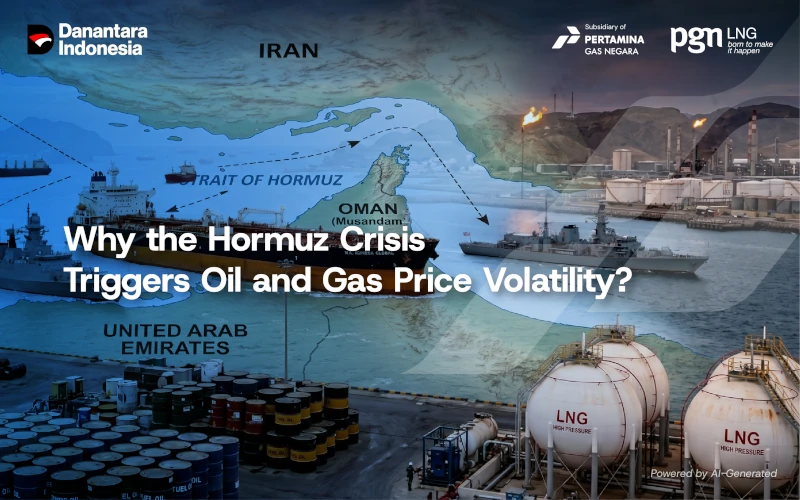
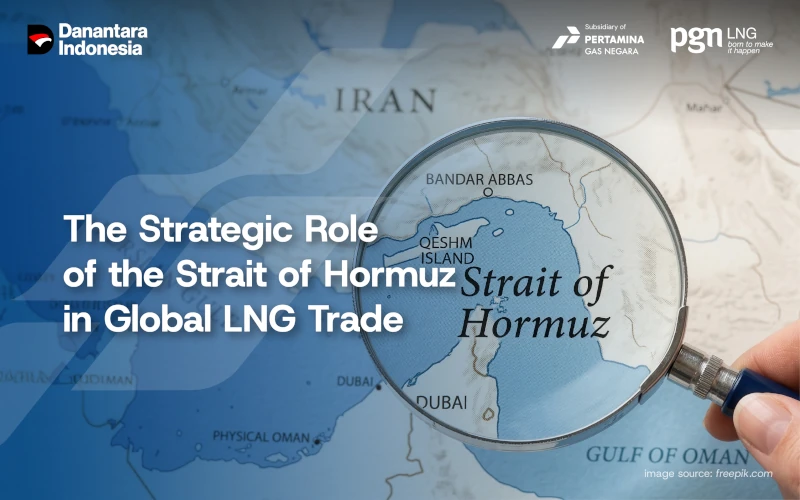
The Strait of Hormuz is the backbone of global energy trade. This strait is not only a key oil distribution route, but even more critically, a vital pathway for LNG (Liquefied Natural Gas). According to IEA data, around 34% of global crude oil trade passes through this strait.
For LNG, approximately 93% of Qatar’s LNG exports and 96% of the UAE’s LNG exports must transit through the Strait of Hormuz because it is the only route to global markets. This makes the Strait of Hormuz not just the most important chokepoint in the Middle East, but one of the most critical energy chokepoints in the world.
When the Iran conflict led to the closure of this strait, the impact was immediate, ranging from surging gas prices in Asian and European markets to cargo shipment delays and supply uncertainty that disrupted global industries.
What Is the Strategic Role of the Strait of Hormuz in Global LNG Trade?
As the only distribution route for Middle Eastern LNG to global markets, the Strait of Hormuz clearly holds an irreplaceable role, especially for countries such as Qatar and the United Arab Emirates. Its strategic roles include:
Main Export Route for Middle Eastern LNG
The Strait of Hormuz is a maritime route connecting the Persian Gulf with the Gulf of Oman and the Arabian Sea before ultimately linking to global energy markets. The LNG exporters most dependent on this route are Qatar and the UAE.
Around 93% of Qatar’s LNG exports and 96% of the UAE’s LNG exports transit through the Strait of Hormuz. Supplies from these two countries account for nearly one-fifth of global LNG trade, which is why the strait is extremely important for LNG distribution from the Middle East.
Supporting Massive Global LNG Trade Volumes
In 2025, the Strait of Hormuz played a crucial role in supporting large volumes of global LNG trade. More than 110 bcm of LNG passed through the strait during 2025, equivalent to nearly 20% of total global LNG trade.
When disruptions occur in the strait, they can create global supply-demand imbalances. The result may trigger LNG shortages in both Asian and European markets.
A Critical Route for Asia’s LNG Supply
Most LNG from Qatar and the UAE passing through the Strait of Hormuz is destined for Asian markets such as China, India, and South Korea. According to the EIA, these three countries absorb 52% of total LNG volumes from the Middle East.
The dependence of Asian countries on this route is extremely high, making the Strait of Hormuz not just a distribution route, but a key factor in maintaining electricity and industrial supply security.
Influencing International LNG Prices
Global gas pricing mechanisms are highly reactive to geopolitical sentiment surrounding the Strait of Hormuz. The risk of conflict can drive LNG prices sharply higher even before a single cargo shipment is physically disrupted.
Markets react quickly to any threat affecting supply from Qatar. In 2025, Qatar accounted for around 20% of global LNG exports, and due to its low production costs, the country acts as a price setter in the Asian LNG market.
As a consequence, even the smallest disruption to Qatar’s supply can immediately move benchmark prices across global markets.
Read More: From Polluted Cities to Green Cities, This is LNG’s Role
What Are the Risks of Conflict in the Strait of Hormuz for the LNG Market?
Security disruptions in the Strait of Hormuz, such as military conflicts, drone attacks, naval mines, or potential blockades, can slow LNG vessel movements and increase risks to global energy distribution.
In situations like these, war risk insurance premiums for ships and shipping costs usually surge, making energy logistics significantly more expensive.
When LNG supplies from the Middle East are disrupted, global buyers compete to secure alternative cargoes from other countries, which can rapidly trigger LNG price spikes.
The impact is felt not only by energy importers but also by industries heavily dependent on natural gas. Industries such as smelters, power plants, heavy manufacturing, ceramics, fertilizers, and mining face the risk of rising energy costs or even operational disruptions.
Read More: Latest Data on Indonesia’s Coal Reserves
Are There Alternative Routes or Replacement Suppliers?
To date, there is no alternative maritime route capable of replacing the role of the Strait of Hormuz for Qatar’s LNG exports at a comparable capacity. Most of Qatar’s LNG export facilities are located in the Persian Gulf, meaning all international shipments must still pass through the strait before reaching global markets.
Therefore, in the event of security disruptions or route closures, the most realistic solution is not rerouting shipments, but replacing LNG supply sources with suppliers from other countries.
This condition forces major LNG-importing countries from the Middle East region, such as China, India, Japan, South Korea, the United Kingdom, Italy, and France, to strengthen supplier diversification strategies in order to become more resilient against geopolitical risks and global energy supply chain disruptions.
Several countries that have the potential to become alternative LNG suppliers include the United States, Australia, Malaysia, Indonesia, and emerging producers in Africa such as Mozambique and Nigeria.
Read More: 5 Largest Natural Gas Producing Countries in the World
How Does PGN LNG Indonesia Help Address Supply Risks?
PGN LNG Indonesia can help companies obtain more flexible LNG supply solutions tailored to operational needs amid uncertainty in the global energy market. PGN LNG Indonesia’s role as an LNG provider across the Indonesian region becomes important when disruptions occur in the international supply chain, including geopolitical risks that affect global energy distribution routes
Through LNG infrastructure support such as receiving terminals, regasification facilities, storage systems, and distribution networks, companies can maintain more secure energy access and ensure operational continuity.
The availability of domestic infrastructure also helps accelerate energy distribution to various industrial sectors requiring stable and sustainable supplies. In addition to maintaining supply continuity, partnerships with domestic LNG providers can help companies diversify energy sources and reduce dependence on a single route or supplier.
Want to know how PGN LNG Indonesia can provide solutions for your company’s energy needs? Read the full explanation in this article: LNG Provider in Indonesia.
References
- IEA. Accessed in 2026. Strait of Hormuz Factsheet
- Reuters. Accessed in 2026. Qatar’s Role in the Global Gas Market
- EIA. Accessed in 2026. About One-Fifth of Global Liquefied Natural Gas Trade Flows Through the Strait of Hormuz