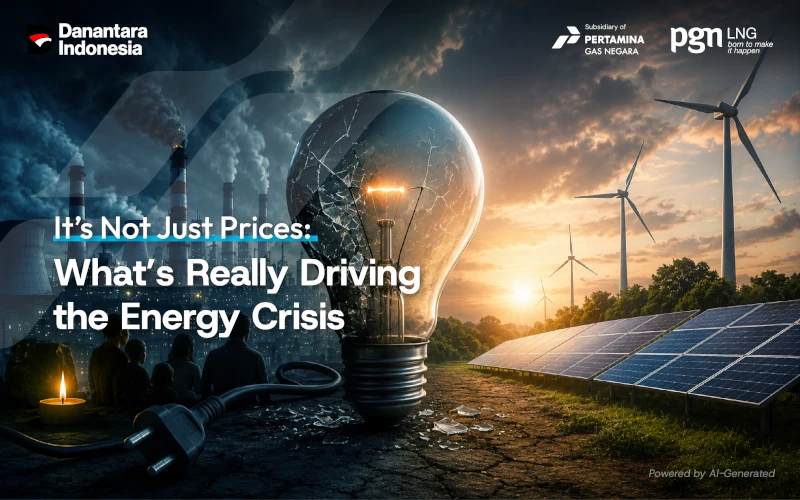
Energy crises are often associated only with rising energy prices. In reality, price spikes are merely the most visible consequence.
In industrial operations, disruptions in energy supply and limited access to energy can cause far greater losses, ranging from production shutdowns and supply chain disruptions to increased operational costs caused by downtime.
For sectors such as mining, smelters, and power generation, the greatest risk is not simply expensive energy but the unavailability of energy when it is needed to maintain continuous operations.
Therefore, understanding the root causes of an energy crisis is an essential first step for companies in developing an energy resilience strategy that keeps operations running smoothly despite various challenges.
What Are the Most Critical Causes of an Energy Crisis for Industry?
Understanding the factors that cause an energy crisis helps companies identify the risks that have the greatest impact on operational continuity while providing a foundation for developing more effective mitigation strategies.
Here are some of the key drivers of an energy crisis:
Supply and Demand Imbalance
Energy demand in the industrial sector often grows faster than investments in production capacity and energy distribution infrastructure. Meanwhile, building power plants, transmission networks, terminals, and storage facilities requires substantial investment and long development timelines.
As the energy reserve margin within a system decreases, even minor operational disruptions can place significant pressure on energy availability.
For industrial businesses, this situation can lead to operational restrictions, reduced production capacity utilization, higher production costs, and delayed expansion plans due to limited energy supply.
Energy Supply Chain and Infrastructure Disruptions
Energy infrastructure is a critical component that ensures energy can be delivered from production sources to end users.
Even when energy resources remain available, disruptions in the supply chain can create shortages at operational sites. These risks may include limited terminal and storage capacity, logistics disruptions, maintenance delays, or obstacles in energy transportation.
For industries, these disruptions can increase the risk of production downtime, reduce productivity, and raise operational costs due to emergency response measures or the use of alternative energy sources.
Dependence on a Single Energy Source or Supply Route
Heavy reliance on a single energy source or supply route significantly increases operational risk when disruptions occur.
This condition is known as a single point of failure, where the failure of one component within the energy system can disrupt an entire company’s operations. The fewer energy supply options a business has, the greater the potential for production interruptions.
As a result, companies face a higher risk of operational shutdowns, greater exposure to energy market fluctuations, and increased long-term business risks.
Geopolitical Risks and Global Uncertainty
Geopolitical conflicts, changes in trade policies, economic sanctions, and international energy policies can all affect energy production, trade, and distribution.
Because global energy markets are interconnected, disruptions in one region can affect supply availability and prices across many other regions. This uncertainty is one of the primary drivers of energy market volatility.
For industrial companies, these conditions can make energy supply contracts less reliable, increase hedging costs, and place additional pressure on profitability.
Fluctuating Energy Prices
Energy price fluctuations are essentially the result of multiple pressures within the energy system, including supply-demand imbalances, distribution disruptions, and geopolitical uncertainty.
Price increases can often be managed through commercial strategies, improved operational efficiency, or optimized energy usage.
However, the greater risk for industrial companies is when energy is simply unavailable when needed. This situation can significantly increase operational costs, strain cash flow, and force companies to adjust product pricing to maintain business continuity.
Read More: Why Switching to Green Energy Matters
How Can Companies Mitigate the Risk of an Energy Crisis?
Energy crisis mitigation aims to reduce the risk of supply disruptions while ensuring business continuity.
This process typically begins with an energy resilience assessment to evaluate a company’s dependence on its current energy sources and identify operational vulnerabilities that could disrupt production.
The assessment results become the basis for developing a multi-sourcing strategy, ensuring that companies do not rely on a single energy source or supplier.
In addition, companies should improve infrastructure flexibility through:
- Maintaining strategic energy reserves
- Expanding energy storage facilities
- Establishing more flexible energy supply contracts
- Preparing alternative energy distribution options
These measures help reduce the risk of supply interruptions.
On the demand side, companies can improve operational efficiency through energy conservation programs and demand management strategies to optimize energy consumption, particularly during supply constraints.
These initiatives should also be supported by a well-defined contingency plan to ensure operational continuity during energy disruptions.
One mitigation approach increasingly adopted across industrial sectors is diversifying energy sources, including the use of Liquefied Natural Gas (LNG) as a more reliable and flexible alternative energy supply.
Read More: The Crucial Role of Alternative Electricity Sources
Why Is LNG an Effective Energy Diversification Solution During an Energy Crisis?
LNG is one form of energy diversification that helps companies reduce dependence on a single energy source or distribution route.
Unlike pipeline gas, LNG offers greater flexibility because it can be stored in specialized tanks and transported by sea or land to virtually any location.
This flexibility gives companies more options for managing energy supply, particularly when disruptions affect primary distribution networks.
In addition, LNG expands energy access to industrial areas that are not connected to natural gas pipeline networks. With more flexible supply options, companies can better maintain operational continuity.
These advantages make LNG one of the leading alternatives considered in industrial energy diversification strategies to strengthen long-term energy resilience.
However, the full benefits of LNG flexibility can only be realized through effective supply chain management. LNG storage, transportation, and regasification require specialized infrastructure and expertise to ensure a secure and reliable energy supply.
This is precisely where an experienced energy partner like PGN LNG Indonesia is needed, one that can manage the entire LNG supply chain while understanding that every industry has different needs, requiring an approach tailored to the scale of the business.
Learn more about how we can become a reliable partner in your company’s energy diversification strategy, read more here: LNG Provider for Industrial Energy.
References
- IEA. Accessed in 2026. Energy Crisis Threatens World’s Most Vulnerable as Cooking Fuel Shortages Grow
- IEA. Accessed in 2026. The Global Energy Crisis
- ESDM. Accessed in 2026. The Important Role of the Oil and Gas Industry in Strengthening National Energy Security
- ESDM. Accessed in 2026. Energy Conservation and Diversification as the Key to Energy Security