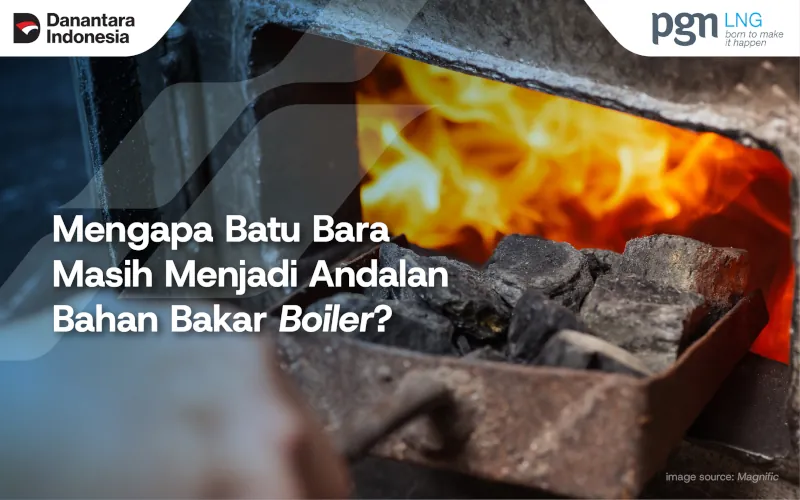
Coal has long been one of the primary boiler fuels across various industrial sectors because it is capable of generating large amounts of thermal energy. Its ability to meet thermal energy needs means coal is still widely used and difficult to replace in industrial processes.
However, coal also produces high carbon emissions, making it a focal point in decarbonization efforts and the transition toward cleaner energy. This raises a question: why do many industries still rely on coal for boilers even though cleaner energy alternatives are now available?
Why Does Coal Still Serve as the Primary Fuel for Industrial Boilers?
Coal is still used as the primary fuel for industrial boilers because it is capable of meeting large-scale energy needs at a competitive cost.
In addition, the availability of supply and mature boiler technology make its use relatively easy for many industries to maintain. These are the factors that keep coal relevant today.
Capable of Meeting Large-Scale Steam Needs
Boilers function to generate steam used for various industrial needs, such as heating processes, drying, and other production processes.
Industries with high steam needs require a heat source capable of working stably. This is where the advantage of coal is able to meet those boiler needs.
Still Competitive Operational Costs
Fuel costs are one of the important components in boiler operations, especially for industries with high energy consumption.
Coal remains a preferred choice because its energy cost is relatively competitive compared to a number of other alternative fuels. This cost efficiency consideration is one of the reasons companies continue to maintain the use of coal-fired boilers.
Abundant and Easily Accessible Coal Supply
Indonesia is one of the world’s largest coal producers. The availability of domestic supply gives industries an advantage in terms of supply security because fuel needs can be met from domestic sources.
This condition also helps reduce the risk of operational disruptions that can occur when fuel supply is limited or disturbed.
Coal Boiler Technology Is Proven
Coal-fired boilers have been used for decades across various industrial sectors, so their technology, operation, and maintenance have developed well.
Many industries also already have facilities, supporting equipment, and experienced workers in operating these systems. For this reason, replacing coal boilers with systems fueled by other sources requires not only a change in technology, but also new investment in infrastructure and equipment.
Read More: Is On-Grid Solar Power the Right Choice for Heavy Industry?
How Do Coal Characteristics Affect Boiler Performance?
Coal has characteristics such as calorific value, moisture content, ash content, and volatile matter that affect its performance as boiler fuel.
A higher calorific value allows coal to produce more thermal energy, so the amount of fuel needed to generate steam can be lower. Conversely, high moisture content causes some of the combustion energy to be used to evaporate water, which can reduce boiler efficiency.
High ash content can cause slagging and fouling, which involve the formation of ash deposits on boiler surfaces, either as hardened deposits that adhere to the surface or as particles that accumulate over time.
These deposits can hinder heat transfer within the boiler. Meanwhile, volatile matter affects the ease of ignition and combustion stability.
For this reason, coal selection needs to be adjusted to the boiler specifications so that the combustion process runs efficiently, steam production remains optimal, and operational costs can be controlled.
Read More: How Reliable Is Off-Grid Solar Power for Remote Industrial Sites?
What Are the Challenges of Using Coal in Industrial Boilers?
Coal combustion produces CO2, SOx, NOx, and particulates that need to be controlled to meet emission standards and support decarbonization targets. For this reason, industries need to implement emission control systems in accordance with boiler needs and applicable regulations.
In addition, fly ash and bottom ash produced from the combustion process also need to be managed as part of boiler operations to ensure their handling complies with environmental regulations.
From an operational standpoint, slagging and fouling can increase boiler cleaning and maintenance requirements, especially if ash buildup disrupts system performance. This condition can increase operational costs and the risk of downtime if not properly addressed.
Read More: Can Biomass Become the Green Energy of Future Industries?
Is Coal Still Relevant for Boilers Amid the Energy Transition?
Coal is still relevant as boiler fuel given that it continues to be used in practice today. However, its use faces pressure as commitments to ESG (Environmental, Social, and Governance) targets, emission reductions, and the development of environmental regulations intensify.
Companies still need to consider their energy needs and operational conditions before switching to lower-emission fuels.
The transition away from coal also cannot be done instantly because it requires consideration of boiler asset investment, the readiness of alternative energy infrastructure, production continuity, and system conversion costs.
For this reason, coal can still be used during the transition process while companies begin evaluating lower-emission alternatives, including LNG as one of the fuel options for boilers.
Read More: The Ideal of Energy Alternatives for Coal Replacements?
Why Is LNG Starting to Be Considered as an Alternative Boiler Fuel?
LNG (Liquefied Natural Gas) is starting to be considered as an alternative boiler fuel because it can generate heat through cleaner combustion compared to coal.
The use of LNG has already been applied as boiler fuel at various industrial facilities, so its use is not merely a theoretical option. Its combustion characteristics also produce lower CO2, SOx, NOx, and particulate emissions compared to coal, which can help companies reduce emissions from boiler operations.
In addition to producing lower emissions, LNG combustion does not produce ash the way coal combustion does. This can reduce combustion residue and boiler cleaning requirements associated with ash buildup.
With these characteristics, LNG is one of the alternatives that companies wishing to reduce emissions while maintaining their thermal energy needs for industrial processes can consider.
The use of LNG as boiler fuel naturally needs to be tailored to energy needs and operational conditions. Beyond the readiness of the combustion system, companies also need to consider how LNG can be supplied and distributed consistently to the operational location.
PGN LNG Indonesia supports these needs through the provision of LNG for various industrial energy needs. With experience and widely distributed infrastructure support, we are ready to deliver solutions to improve energy efficiency and reduce operational emissions in your industry.
What solutions do we provide for you? Read the complete explanation here: Best LNG Partner Provider.
References
- ESDM. Accessed 2026. Coal Commodity Plays an Important Role in National Economic Growth
- IEA. Accessed 2026. Coal
- ScienceDirect. Accessed 2026. Thermal resistance by slagging and its relationship with ash properties for six coal blends in a commercial coal-fired boiler
- Taishan Group. Accessed 2026. Top 5 Key Factors Affecting Coal-Fired Boiler Efficiency
- CED Engineering. Accessed 2026. Boiler Fuels, Emissions and Efficiency