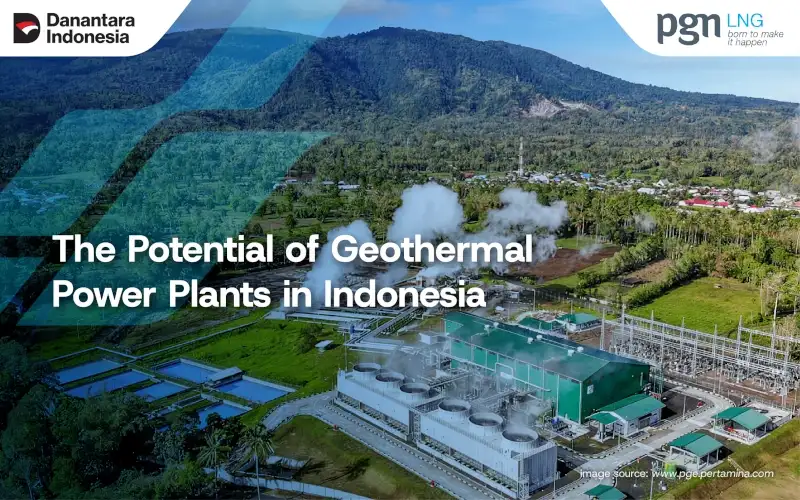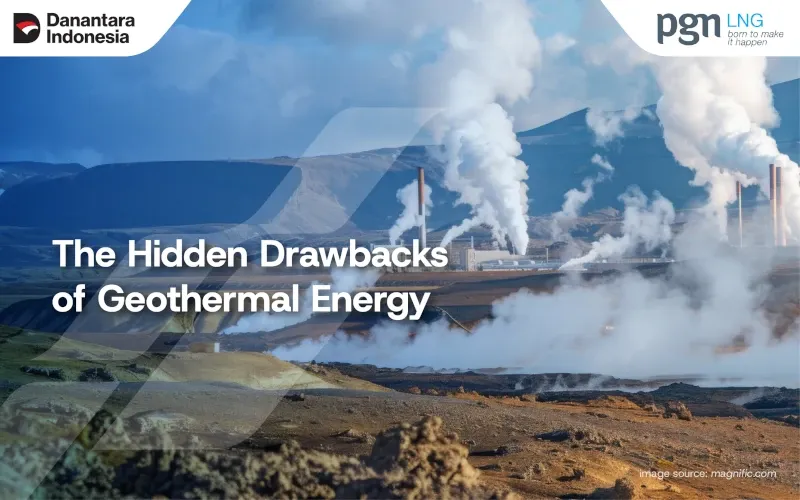
Geothermal energy comes from heat beneath the Earth’s surface and is used to generate electricity. Hot fluid, either water or steam, is brought up from underground reservoirs to drive turbines and generators.
According to Indonesia’s Ministry of Energy and Mineral Resources, Indonesia’s installed geothermal power capacity reached about 2,744 MW in 2025. This shows that geothermal is already helping supply the country’s energy needs.
Although geothermal is a renewable energy source with great potential, its development can still have negative effects on the environment and the areas around a project.
What Are the Negative Impacts of Geothermal Energy?
The environmental impact of geothermal varies from project to project, depending on the reservoir’s characteristics, the technology used, the location, and how geothermal fluids are managed. For this reason, these impacts need to be considered and managed from the planning stage through to operations.
Potential Gas Emissions and Their Impact on Air Quality
Geothermal fluids can contain dissolved gases, including hydrogen sulfide (H₂S) and carbon dioxide (CO₂), which may be released during drilling, well testing, and plant operations.
H₂S has a distinctive rotten egg smell and, at certain concentrations, can affect health and reduce air quality near the emission source. Geothermal plants do not produce emissions by burning fuel the way fossil fuel plants do, but these gas releases still need to be controlled with emission control technology.
Potential Water Pollution
Geothermal fluids can carry minerals, metals, and other dissolved compounds from the reservoir, including arsenic, mercury, boron, and dissolved salts. If the fluid or wastewater is not managed properly, these substances can contaminate surface water and groundwater.
That is why fluid management is a key part of geothermal operations. One common method is reinjection, which returns fluid to the reservoir through injection wells to reduce discharge into the environment.
Land Use Changes and Ecosystem Disruption
Geothermal development requires infrastructure such as access roads, drilling sites, production and injection wells, pipelines, and power plant facilities. Building them can change land use, clear vegetation, fragment habitats, and disturb the surrounding ecosystem.
For this reason, site selection and land management deserve careful attention to minimize the environmental changes caused by construction.
Noise from Project Activities
Geothermal activities can generate noise, especially during exploration, drilling, and construction, when equipment and operational vehicles are in use. Once a plant is running, noise can also come from turbines, cooling systems, pumps, and other supporting facilities.
This noise can disturb nearby communities and the surrounding environment if facilities are located close to residential areas or noise-sensitive sites.
Changes in Subsurface Conditions and Seismic Activity
Producing and reinjecting geothermal fluid can change the pressure and fluid conditions in the subsurface reservoir.
In certain cases, these changes, particularly those related to injection pressure and the presence of faults, can trigger induced seismicity, which refers to earthquakes caused or influenced by human activity.
Monitoring seismic activity and reservoir conditions is therefore necessary to help identify and control these risks.
Land Subsidence
Extracting large volumes of fluid from a geothermal reservoir can change subsurface pressure and cause rock compaction, which contributes to subsidence, or the sinking of the ground surface.
For this reason, monitoring reservoir conditions and surface deformation should go hand in hand with proper fluid management to help control the risk of land subsidence.
Read More: How Much Can Rooftop Solar Reduce Reliance on Coal?
How Can the Impacts of Geothermal Energy Be Reduced?
Various potential environmental impacts of geothermal energy can be mitigated through proper planning, technology, and management, from the development stage through to operations.
One approach is reinjection, which returns geothermal fluid to the reservoir to reduce discharge into the environment while also helping maintain reservoir conditions. In addition, the choice of power plant technology should be matched to the characteristics of the resource.
Mitigation also includes managing water and liquid waste to keep harmful substances out of waterways. Beyond that, monitoring subsurface conditions and seismic activity remains essential for detecting changes related to fluid production and reinjection.
With these measures in place, potential environmental impacts can be kept under control, allowing geothermal development to proceed more responsibly.
Why Should the Impacts of Geothermal Energy Factor into Energy Source Decisions?
For companies with large energy needs, choosing an energy source takes more than checking whether it is renewable.
Companies also need to evaluate energy availability at their operating sites, supply reliability and continuity, how well the source fits production processes, infrastructure readiness, and the environmental impact along with their ability to manage the associated risks.
These considerations matter because every energy source has its own characteristics and operational requirements.
Geothermal has the advantage of providing continuous electricity and can serve as a baseload power source. However, its development depends on the characteristics of the geothermal resource and suitable locations, and using it in industry also requires power transmission infrastructure.
Companies therefore need to consider a combination of energy sources that fits their operational needs, including during the energy transition.
In such a combination, LNG (Liquefied Natural Gas) can be one option for meeting thermal energy needs as well as supporting power generation, particularly when an energy source is needed that can be adapted to the demands and infrastructure conditions of the industry.
Read More: Top 5 Oil-Producing Countries
LNG as a Transitional Energy Option to Support Industrial Needs
During the energy transition, industries need energy sources that not only support emissions reduction but also meet operational needs reliably. LNG can be one such option because it can be used as a fuel for process heat and power generation, depending on the facility’s configuration.
Compared with coal, natural gas can produce lower combustion CO₂ emissions per unit of energy under certain conditions. However, the overall emissions benefit still depends on how efficiently it is used and on methane leakage along the supply chain.
For industries operating beyond the reach of gas pipelines, LNG makes it possible to supply gas to remote locations through storage, distribution, and regasification. With the right infrastructure and supply planning, LNG can meet energy needs and help maintain operational continuity.
Choosing LNG still requires weighing energy needs, costs, facility readiness, and the company’s environmental targets so that its use fits the long-term energy strategy.
Each industry’s gas needs differ, depending on consumption scale, operating location, and the readiness of supporting infrastructure. This is why using LNG as a transitional energy option should be backed by a supply solution that covers everything from procurement to distribution, so that operational needs are met as effectively as possible.
PGN LNG Indonesia provides LNG solutions covering supply, storage, distribution, and regasification to support the energy needs of various industrial sectors. With these integrated services, companies can consider using LNG in line with their operational needs and infrastructure conditions.
Want to learn more about how our LNG solutions can meet your industry’s energy needs? Read more here: LNG Supplier in Indonesia.
References
- ESDM. Accessed 2026. Bauran EBT di Sektor Listrik Lampaui Target RUKN
- EIA. Accessed 2026. Geothermal explained
- IFC. Accessed 2026. EHS Guidelines: Power
- IFC. Accessed 2026. Environmental, Health, and Safety Guidelines for Geothermal Power Generation