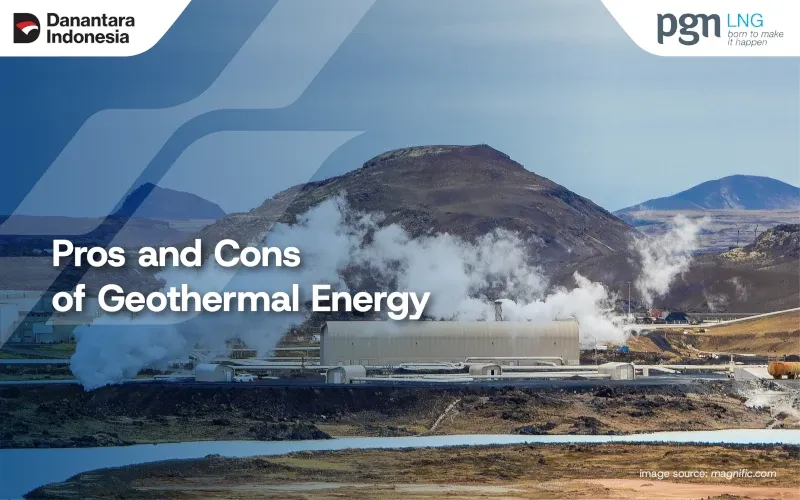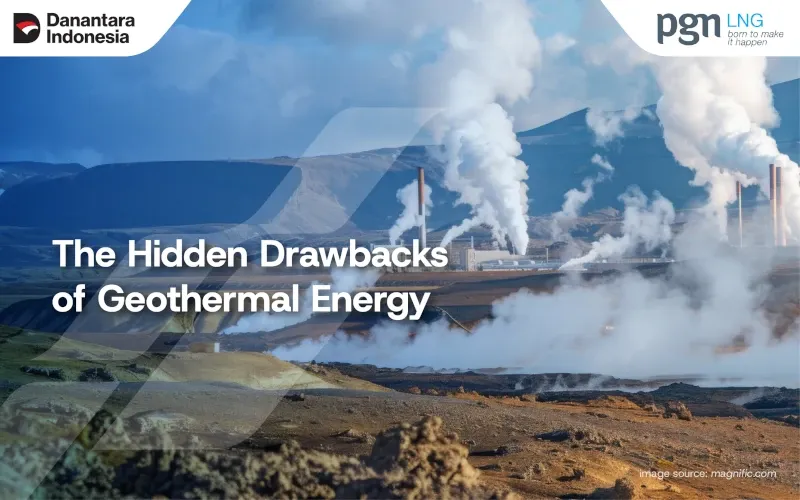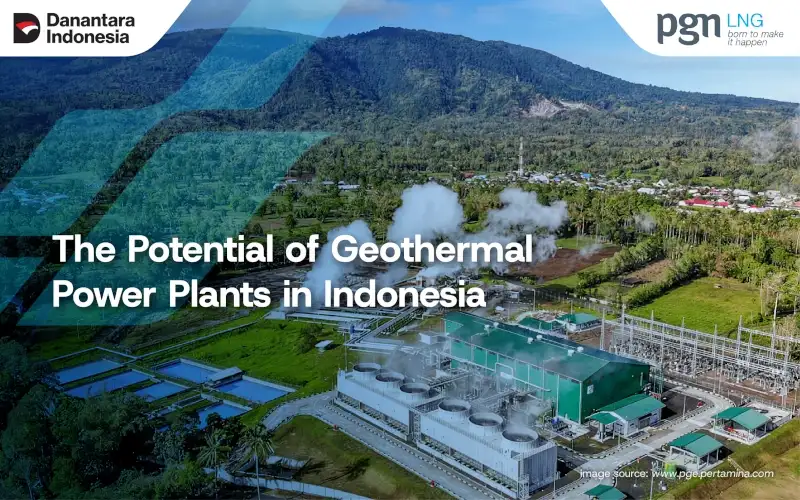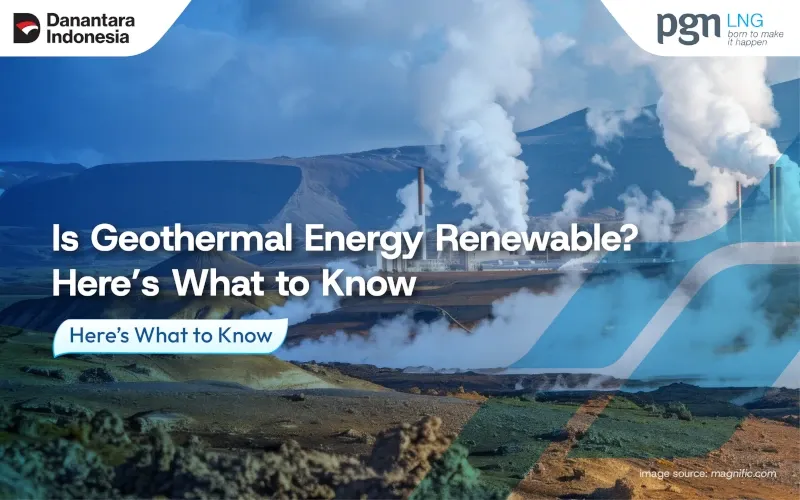
As a country located in the Pacific Ring of Fire, Indonesia has geological conditions that strongly support the formation of geothermal resources.
According to 2026 data from Indonesia’s Ministry of Energy and Mineral Resources (ESDM), Indonesia has geothermal potential of about 23.2 GW spread across many regions, from Sumatra, Java, Bali, Nusa Tenggara, Sulawesi, and Maluku to Papua. This potential makes geothermal one of the renewable energy sources that Indonesia continues to develop.
As a source of electricity, geothermal has the advantage of supplying power continuously. But if geothermal resources are tapped and used over the long term, is this energy truly renewable?
Is Geothermal Energy Renewable?
Yes, geothermal energy is a renewable energy source because it draws on the earth’s internal heat, which is continually available through natural processes.
However, renewable does not mean that the resource in every reservoir can be used without limits. If fluid is extracted faster than the reservoir can sustain its supply and pressure, geothermal production can decline.
For this reason, sustainability depends on the reservoir’s characteristics, the rate of production, and the availability of natural fluid flow, known as recharge.
One way to sustain production is fluid reinjection, which returns used fluid to the reservoir through injection wells to help maintain fluid balance and pressure.
This process does not replenish geothermal heat instantly, since recovery of thermal conditions still depends on the reservoir’s characteristics and natural heat transfer.
Read More: What in Coal Contributes to Emissions?
How Reliable Is Geothermal Energy for Meeting Energy Needs?
Geothermal energy can generate electricity continuously, including at night and when weather conditions change, which makes it a dependable energy source.
This sets it apart from solar and wind power, whose output depends on sunlight and wind speed and therefore tends to fluctuate.
According to the International Renewable Energy Agency (IRENA), geothermal power plants that came online in 2024 generated electricity equal to an average of 88% of their maximum capacity.
These characteristics give geothermal the potential to be a reliable source of power for meeting energy needs on a sustained basis.
For industries that need a continuous energy supply, the reliability of geothermal still has to be assessed based on resource availability at the site, the capacity that can be supplied, and how well it fits operational needs.
What Are the Challenges of Developing Geothermal Energy?
Although Indonesia has large geothermal potential, not all of these resources can be used right away.
Geothermal development depends on the geology and reservoir characteristics at a specific site, so the resource is not always located near industrial areas or electricity demand centers.
In addition, exploration requires heavy upfront investment and carries the risk of uncertain subsurface conditions. Development also calls for supporting infrastructure to carry energy from the resource site to the areas that need it.
These challenges show that large energy potential does not necessarily guarantee supply at every location.
Companies should therefore consider project readiness, infrastructure, and operational needs when choosing an energy source, including the possibility of combining geothermal with other energy sources to support supply continuity.
Read More: What Are the Pros and Cons of Renewable Energy for Industry?
Why Should Companies Consider an Energy Mix?
Companies should consider an energy mix so that operational needs can be met reliably while also supporting energy transition targets.
The choice of energy source should be matched to supply availability at the site, supply continuity, required capacity, infrastructure readiness, operational characteristics, and the company’s emissions reduction targets.
This matters because each energy source has different supply characteristics and infrastructure requirements.
One approach worth considering is combining several energy sources according to operational needs. In this case, natural gas in the form of liquefied natural gas (LNG) can be a complementary option, especially for industrial facilities that need a reliable energy supply.
LNG can help meet energy needs without having to be positioned as a direct replacement for geothermal energy. This approach is also part of a company’s energy mix strategy to keep supply reliable and support emissions reduction efforts.
Read More: What Gases from Coal Cause Air Pollution?
LNG as a Supporting Option for Industrial Energy Needs
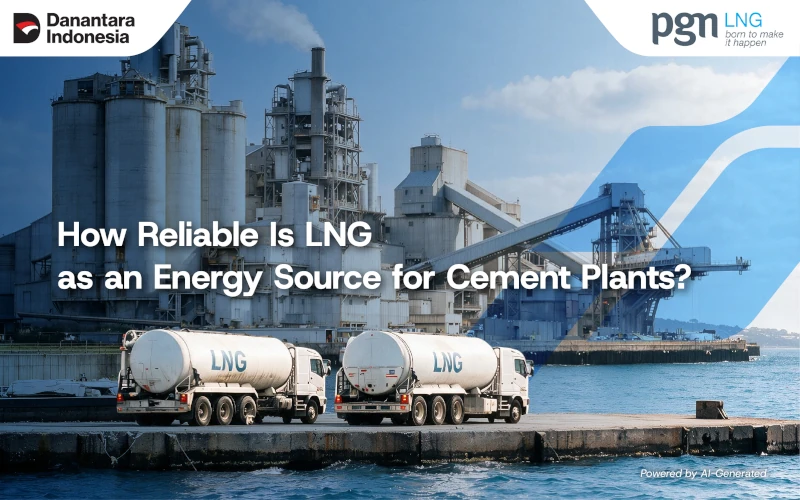
LNG can be one option in an industrial energy mix because it allows natural gas to be delivered to locations that gas pipelines do not yet reach. Once transported in liquid form, LNG can be stored and converted back into gas through regasification before use.
This distribution flexibility can help companies obtain natural gas, including to support thermal energy needs and power generation.
In supporting industrial operations, LNG can be considered as part of an energy diversification strategy to help maintain supply continuity.
However, using LNG as part of energy diversification needs to be backed by a supply system that fits the company’s needs and operating location. Supply availability, storage facilities, and the distribution and regasification process are all important to make sure natural gas can be used effectively to support industrial activities.
PGN LNG Indonesia provides LNG solutions that cover the supply chain, from procurement through distribution and regasification, to support the energy needs of various industrial sectors. With these services, companies can maintain a reliable energy supply for their operations.
Find out how our LNG solutions can support your industry’s energy needs. Read the full explanation here: LNG Supplier in Indonesia.
References
- ESDM. Accessed 2026. Geothermal Energy to Support Maleo Conservation
- ESDM. Accessed 2026. Indonesia Siap Jadi Negara Produsen Listrik Panas Bumi Terbesar Dunia
- IEA. Accessed 2026. The Future of Geothermal Energy
- IRENA. Accessed 2026. Renewable Power Generation Costs in 2024
- EIA. Accessed 2026. Geothermal explained